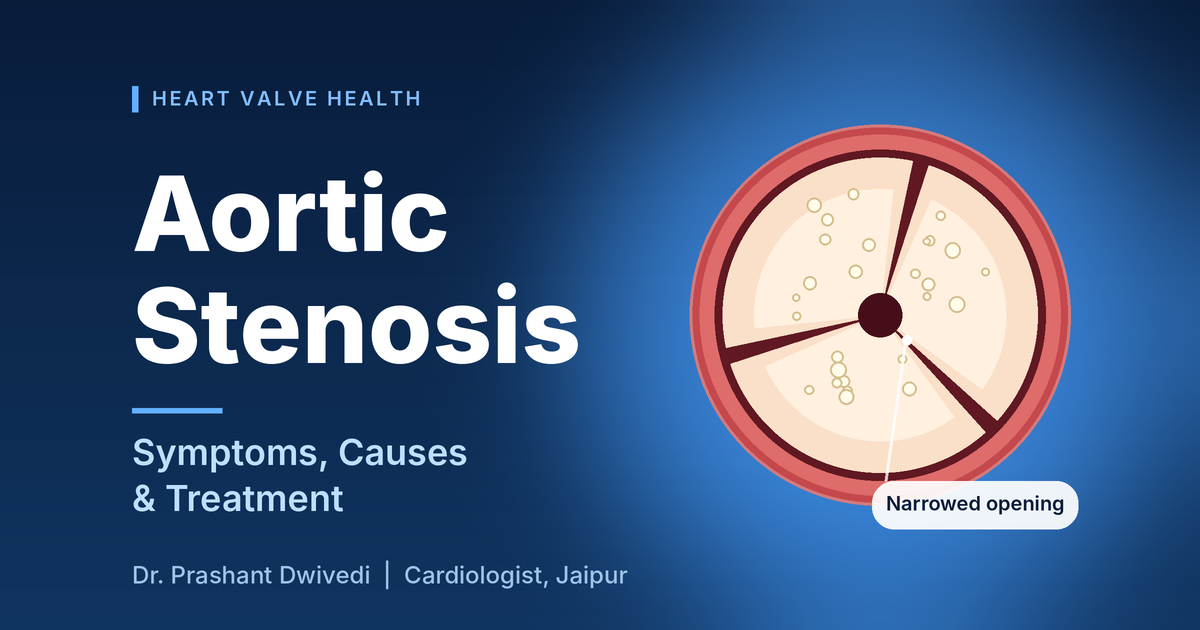
Aortic stenosis is a narrowing of the aortic valve, the "exit door" through which blood leaves the heart and travels to the rest of the body. Aortic stenosis symptoms often stay hidden for years, so many people first hear about the problem when a doctor notices a heart murmur during a routine check-up. This guide explains the warning signs, causes, tests and treatment options in simple language, so you know when to act.
Key points at a glance
- Aortic stenosis can be silent for many years.
- Breathlessness on exertion, chest pain and fainting are the main warning signs.
- Medicines can ease symptoms but cannot reopen a narrowed valve.
- Once the narrowing is severe and causes symptoms, replacing the valve (TAVR or surgery) is the main treatment.
What Is Aortic Stenosis?
The aortic valve has three thin leaflets that open fully with every heartbeat and close tightly in between. In aortic stenosis the leaflets become thick, stiff or fused, so the valve opens only partly. The heart has to push harder to send blood through the smaller opening. Over time the heart muscle thickens, then tires, and this can lead to heart failure.
Aortic stenosis can be mild, moderate or severe. According to MedlinePlus, it affects about 2 in 100 people above the age of 65, and it is more common in men than in women.
Aortic Stenosis Symptoms: What to Watch For
Most people have no symptoms until the valve is significantly narrowed. When symptoms begin, they usually show up with effort, because the heart cannot raise its output when the body needs more blood.
Common symptoms
- Breathlessness while walking, climbing stairs or sometimes when lying flat
- Chest pain or tightness, especially during activity
- Dizziness, light-headedness or fainting, particularly on exertion
- Unusual tiredness and reduced stamina
- Palpitations (awareness of a racing or irregular heartbeat)
- Swelling of the feet and ankles in later stages, when heart failure develops
Warning signs that need urgent care
Go to the nearest hospital emergency department if you faint during exertion, have chest pain that does not settle with rest, or develop sudden severe breathlessness. These symptoms overlap with a heart attack, so please do not try to diagnose yourself. You can read more in our guide on the signs of an unhealthy heart.
Why symptoms should never be ignored
Once symptoms appear, the outlook without treatment worsens quickly. Older studies suggest that average survival without valve replacement can be as short as two to three years after symptoms begin. The encouraging part is that results after valve replacement are often excellent, which is why early evaluation matters.
What Causes Aortic Stenosis?
- Age-related calcification: the most common cause. Calcium slowly builds up on the leaflets over many years and makes them stiff.
- Bicuspid aortic valve: some people are born with two leaflets instead of three. Such valves tend to wear out and narrow earlier in life.
- Rheumatic heart disease: damage to the valve after rheumatic fever, which follows an untreated streptococcal sore throat. It remains an important cause in India.
- Chest radiation: a rare cause, after radiation treatment for cancer.
Risk factors
High blood pressure, high cholesterol, diabetes, smoking, kidney disease and a family history of valve disease can all speed up valve damage. To understand the cholesterol link better, read our article on cholesterol and heart disease.
How Is Aortic Stenosis Diagnosed?
The first clue is often a murmur heard through the stethoscope. After that, the following tests help confirm the diagnosis and its severity:
- Echocardiography: the key test. This ultrasound of the heart shows how widely the valve opens, how fast blood flows through it and how well the heart muscle is working.
- ECG and chest X-ray: check the heart rhythm and heart size.
- CT scan: helps when the echo result is unclear, and is also used to measure the valve and blood vessels if TAVR is planned.
- Coronary angiography: checks the heart arteries before a valve procedure. See our guide to coronary angiography.
- Exercise test: used only in selected people without symptoms, under close supervision.
How doctors grade severity
| Grade | Peak blood-flow speed | Mean pressure difference | Valve opening area |
|---|---|---|---|
| Mild | 2.0 to 2.9 m/s | Below 20 mmHg | Above 1.5 cm² |
| Moderate | 3.0 to 3.9 m/s | 20 to 39 mmHg | 1.0 to 1.5 cm² |
| Severe | 4.0 m/s or more | 40 mmHg or more | 1.0 cm² or less |
These numbers are only for general understanding. Some patients have severe stenosis even when the numbers look different, so the report must always be interpreted by a cardiologist.
Aortic Stenosis Treatment
Regular monitoring for mild or moderate stenosis
If the narrowing is mild or moderate and you have no symptoms, you usually do not need a procedure. You need regular check-ups and repeat echocardiograms. The more severe the narrowing, the more often the scan is repeated, and your cardiologist decides the interval.
Medicines
Medicines can control blood pressure, remove excess fluid and treat irregular heartbeats, but they cannot widen the valve. Do not stop or change any heart medicine without advice. In severe stenosis, some blood pressure medicines must be used carefully, and dehydration should be avoided.
Valve replacement
Replacing the valve is the definitive treatment once stenosis is severe and causes symptoms, or when the heart's pumping strength begins to fall. In some people without symptoms, doctors may also advise earlier replacement if exercise capacity drops, heart function weakens or the valve narrows rapidly. The main options are:
- Surgical aortic valve replacement (SAVR): open-heart surgery in which the diseased valve is removed and replaced with a mechanical or tissue valve. A mechanical valve needs lifelong blood-thinning medicine. Learn more in minimally invasive vs open heart surgery.
- TAVR / TAVI: a new valve is delivered through a thin tube, usually from an artery in the groin, without opening the chest. Hospital stay and recovery are often shorter. Read the full TAVR/TAVI procedure guide or visit our TAVR treatment page.
- Balloon aortic valvuloplasty: a balloon is used to stretch the valve. The benefit is often temporary, so it is used in selected patients, sometimes as a bridge to valve replacement. See balloon aortic valvuloplasty (BAV).
Surgery or TAVR: how the choice is made
The choice depends on age, other illnesses, valve anatomy, access through the leg arteries and the patient's own preference. As a general guide, the 2020 ACC/AHA valve guideline prefers surgery for patients under about 65 years, prefers TAVR when it is feasible for those above about 80 years, and leaves the choice open between 65 and 80 after shared decision-making. Your heart team will weigh all these factors for you.
Living With Aortic Stenosis: Everyday Tips
- Attend every scheduled follow-up and echocardiogram.
- Keep blood pressure, sugar and cholesterol under control, and avoid tobacco in any form.
- Ask your cardiologist before starting intense exercise. In severe stenosis, heavy straining and competitive sports are usually discouraged.
- Drink enough fluids, especially in the hot Jaipur summer, because dehydration can worsen symptoms.
- Take care of your teeth and gums, and ask your doctor whether you need antibiotics before dental procedures.
- Follow a heart-friendly diet. Our heart-healthy diet guide has simple Indian food ideas.
- Make sure children with a sore throat get proper treatment, as this helps prevent rheumatic fever.
When Should You See a Cardiologist?
Book a consultation if a doctor has told you that you have a heart murmur, if you get breathless on stairs earlier than before, if you feel chest pressure or tightness on effort, or if you feel dizzy or faint. If you already know you have aortic stenosis and a new symptom appears, do not wait for your next scheduled visit.
Aortic Stenosis Care in Jaipur
Dr. Prashant Dwivedi is an interventional and structural heart cardiologist who is in charge of the TAVR and Structural Heart Disease Programme at the Eternal Heart Care Centre and Research, Jaipur. Evaluation usually includes a detailed echocardiogram and a CT scan, and the treatment plan is discussed with you and the heart team. To know what to look for in a valve specialist, read how to choose a heart valve replacement expert in Jaipur, or learn how to get ready for treatment in preparing for TAVR in Jaipur. You can book an appointment for a personal assessment.
Frequently Asked Questions
What are the first signs of aortic stenosis?
Often there are none. When signs appear, the first ones are usually breathlessness or tiredness on activity, chest tightness on effort, or dizziness. Sometimes the first sign is just a murmur heard by a doctor during a check-up.
Can aortic stenosis be treated with medicines alone?
Medicines can control symptoms and related problems such as high blood pressure or fluid build-up, but they cannot reopen the narrowed valve. Severe aortic stenosis with symptoms needs valve replacement.
How long can a person live with aortic stenosis?
It depends on the severity. People with mild stenosis often live a normal lifespan with regular monitoring. Severe stenosis with symptoms carries a high risk if left untreated, but outcomes after valve replacement are often excellent. Your cardiologist can give you an individual outlook.
Is TAVR better than open-heart surgery for aortic stenosis?
Neither is better for everyone. TAVR avoids opening the chest and often means a quicker recovery, while surgery is usually preferred for younger patients. The heart team chooses based on age, health, valve anatomy and patient preference.
Can aortic stenosis be prevented?
Age-related valve wear cannot be fully prevented, but you can lower the risk by controlling blood pressure, cholesterol and diabetes, avoiding tobacco, and treating sore throats promptly to prevent rheumatic fever.
This article is for general educational purposes only and does not replace personal medical advice, diagnosis or treatment. Please consult a qualified cardiologist about your own condition. In an emergency, go to the nearest hospital.

Dr. Prashant Dwivedi
Interventional and Structural Heart Cardiologist with expertise in TAVR, TMVR, MitraClip and advanced cardiac procedures.