Atrial fibrillation, often called AFib or AF, is the most common long-lasting heart rhythm problem. Atrial fibrillation symptoms can be obvious, such as a racing, uneven heartbeat, or so mild that they go unnoticed for years. The condition matters mainly because it raises the risk of stroke, and that risk can be lowered with the right treatment. This guide explains the symptoms, causes, tests and treatment options in simple language.
Key points at a glance
- In AFib the upper chambers of the heart beat in a fast, chaotic way, so the pulse becomes irregular.
- Some people feel palpitations, breathlessness or tiredness, while others have no symptoms.
- AFib can raise the risk of stroke by up to five times, which is why blood thinners are often needed.
- Medicines, electrical cardioversion and catheter ablation can control the rate and the rhythm.
What Is Atrial Fibrillation?
A normal heartbeat starts from a small electrical centre in the right upper chamber (atrium) and spreads in an orderly way, so the atria and the lower chambers (ventricles) contract in turn. In atrial fibrillation this electrical system misfires. The atria quiver instead of contracting strongly, and the ventricles respond at an irregular and often fast pace. The NHS describes it as a heart rhythm problem in which the heartbeat is not steady.
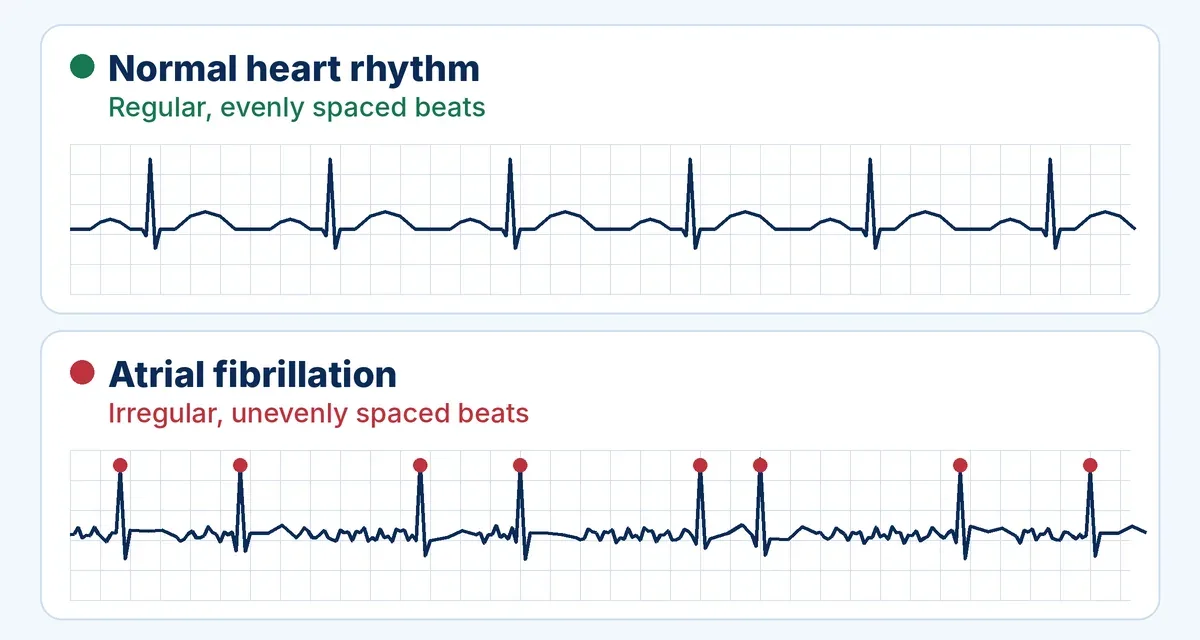
In a normal rhythm the beats are evenly spaced. In atrial fibrillation the spacing is irregular.
Types of atrial fibrillation
- Paroxysmal: episodes start and stop on their own, usually within days.
- Persistent: an episode lasts longer and usually needs treatment, such as medicines or cardioversion, to return to a normal rhythm.
- Long-standing or permanent: the irregular rhythm continues, and treatment focuses on controlling the heart rate and preventing stroke.
Atrial Fibrillation Symptoms: What You May Notice
Symptoms vary from person to person and can come and go. They also depend on how fast the heart is beating and on whether you have other heart problems.
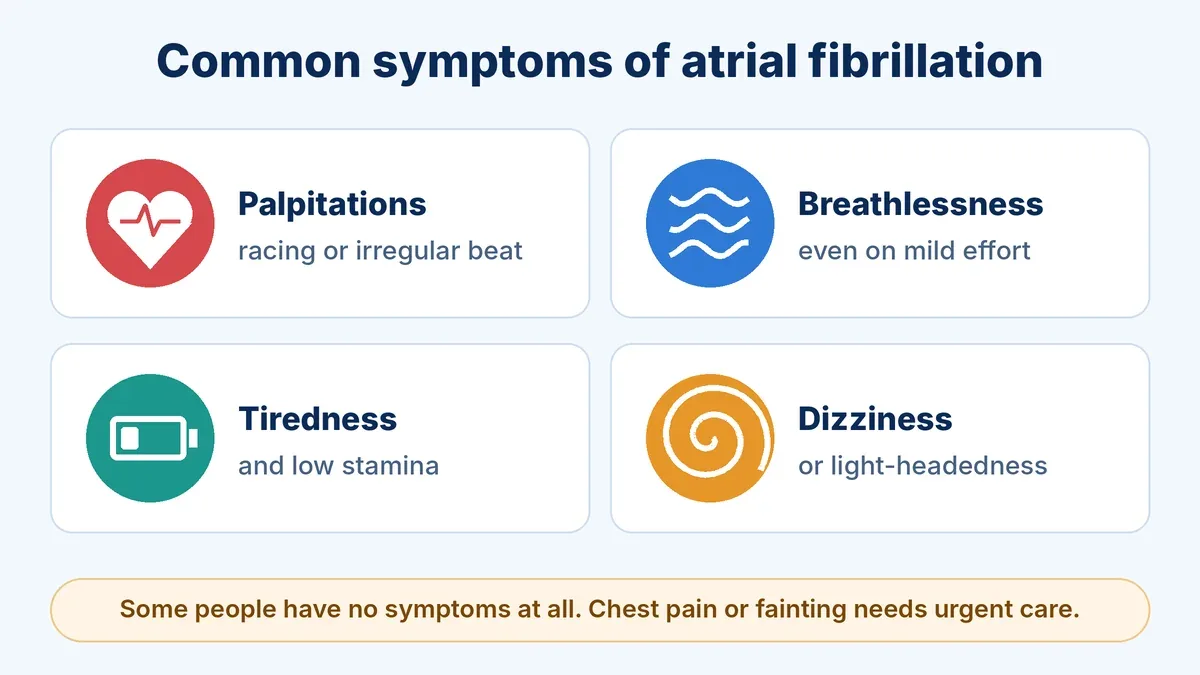
Common symptoms of atrial fibrillation. Some people have none.
Common symptoms
- Palpitations: a fluttering, pounding, racing or irregular heartbeat
- Breathlessness, especially on activity
- Unusual tiredness and reduced stamina
- Dizziness or light-headedness
- Chest discomfort or tightness
Silent atrial fibrillation
Some people have no symptoms at all, and AFib is found by chance during an ECG, a routine check-up or a test for another problem. It is just as important to treat in these people, because the stroke risk is still there.
Warning signs that need urgent care
Seek emergency help straight away if a fast or irregular heartbeat comes with chest pain, severe breathlessness, fainting or confusion. Also go to hospital at once for signs of a stroke, such as weakness or numbness on one side of the face or body, trouble speaking, or sudden loss of vision. Do not drive yourself. To compare with other symptoms, see our guide on the signs of an unhealthy heart and on a cardiac emergency.
Why Atrial Fibrillation Raises the Risk of Stroke
When the atria quiver, blood can pool in the upper chamber, especially in a small pouch called the left atrial appendage, and a clot can form there. If a clot travels to the brain it can block an artery and cause a stroke. The American Heart Association states that people with AFib are up to five times more likely to have a stroke than people without it. Stroke from AFib is often more severe, which makes prevention important.
What Causes Atrial Fibrillation?
AFib is caused by a problem in the heart's electrical system, and many conditions and habits can trigger it:
- High blood pressure: the most common underlying condition. Read about high blood pressure and your heart.
- Heart failure, heart attack and coronary artery disease (see congestive heart failure)
- Heart valve disease, such as aortic stenosis or mitral valve problems
- Overactive thyroid, diabetes, kidney disease and sleep apnoea
- Heavy or binge alcohol intake and smoking
- Obesity, increasing age (the risk rises after 55), and long periods of intense endurance training
- Recent heart surgery, infection or severe illness
How Is Atrial Fibrillation Diagnosed?
- Pulse check: a pulse that feels irregular, with no regular pattern, can be an early clue, but it needs a heart tracing to confirm.
- ECG: the key test. It records the heart's electrical activity and can show AFib if it is present at that moment.
- Holter or event monitor: a portable recorder worn for a day or longer, or a longer period, to catch episodes that come and go.
- Echocardiography: an ultrasound that checks the heart valves, chamber size and pumping strength.
- Blood tests: mainly for thyroid function, kidney function and other causes.
Smartwatches and other wearables can flag an irregular pulse, but a doctor must confirm the rhythm with an ECG before a diagnosis is made.
Atrial Fibrillation Treatment
Treatment has three main goals: control the heart rate, bring back or keep a normal rhythm where appropriate, and prevent stroke. Your cardiologist decides the right mix on the basis of your symptoms, age, other illnesses and stroke risk.
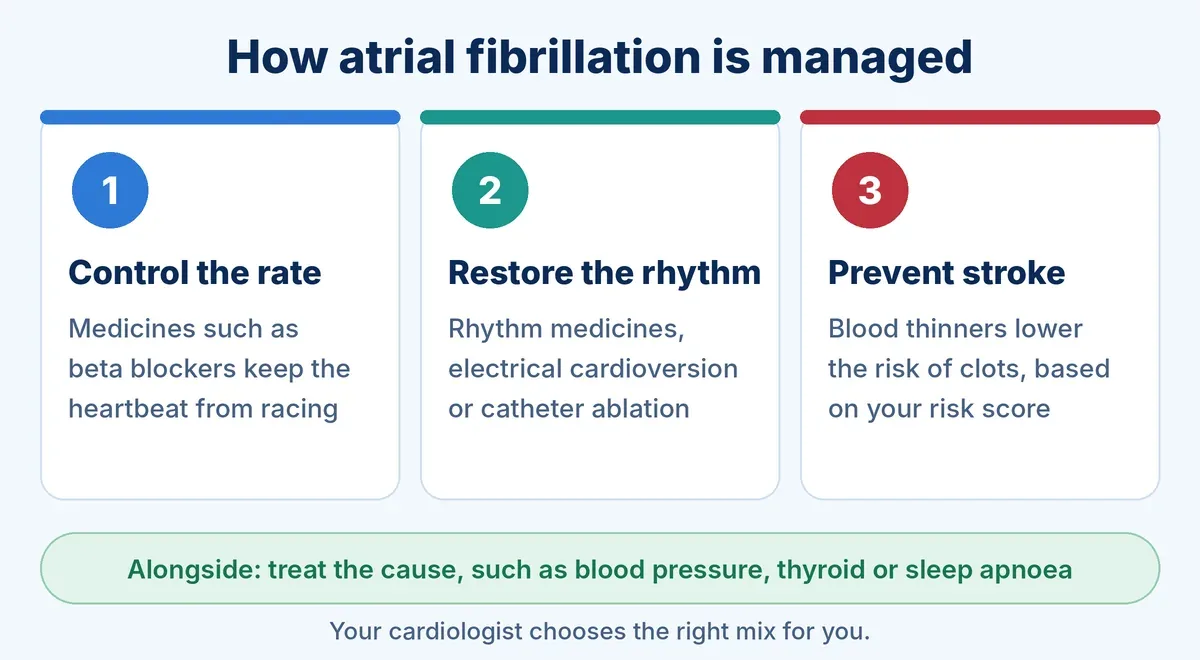
Treatment of atrial fibrillation has three goals: rate, rhythm and stroke prevention.
Rate control
Medicines such as beta blockers, and some other heart-rate-lowering medicines, slow the heartbeat so that it does not race. This often improves breathlessness and tiredness.
Rhythm control
- Rhythm medicines help the heart stay in a normal rhythm.
- Electrical cardioversion: a controlled electric shock, given under sedation, to reset the rhythm.
- Catheter ablation: thin tubes are guided through a blood vessel to the heart to treat the small areas that trigger AFib. It is usually considered when symptoms continue despite medicines. The AHA notes that ablation or surgery may be needed if other treatments do not reduce the risks and symptoms. AFib can return after ablation, so follow-up is still needed.
Blood thinners to prevent stroke
Doctors usually estimate your stroke risk with a scoring system such as CHA₂DS₂-VASc, which considers age, sex, blood pressure, diabetes, heart failure and previous stroke. If the risk is high enough, an anticoagulant (blood thinner) is advised. In people with a mechanical heart valve or significant mitral valve narrowing, warfarin is generally the preferred choice. Take the tablets exactly as prescribed, never stop them on your own, and tell your doctor about any bleeding, black stools or a head injury.
Treating the underlying cause
Better control of blood pressure, thyroid disease, diabetes and sleep apnoea, and cutting down alcohol, can reduce AFib episodes. Some people with a very slow heart rate need a pacemaker in addition to medicines.
Living With Atrial Fibrillation: Everyday Tips
- Take heart medicines and blood thinners at the same time each day, and do not skip doses.
- Aim for regular moderate activity, around 150 minutes a week, unless your doctor advises otherwise. See how regular exercise improves heart health.
- Limit alcohol, and notice whether caffeine, stress, dehydration or poor sleep trigger your episodes. Our article on coffee and the heart explains safe intake.
- Keep a healthy weight, avoid tobacco and follow a heart-healthy diet.
- Learn to feel your pulse at the wrist, and note when palpitations start, how long they last and what you were doing.
- Keep up with regular blood pressure and ECG follow-up visits.
When Should You See a Cardiologist?
Book a consultation if you have repeated palpitations, an irregular pulse, unexplained breathlessness, dizziness or tiredness, or if an ECG or smartwatch has shown an irregular rhythm. If you already have AFib and your symptoms change, your medicines cause side effects or you notice any bleeding, do not wait for the next scheduled visit.
Heart Rhythm Care in Jaipur
Dr. Prashant Dwivedi is an interventional and structural heart cardiologist practising at the Eternal Heart Care Centre and Research, Jaipur. A visit usually includes a pulse and blood pressure check, an ECG, and an echocardiogram or rhythm monitoring when needed, followed by a plan that you can follow at home. You can book an appointment for a personal assessment.
Frequently Asked Questions
Is atrial fibrillation dangerous?
AFib itself is often not an immediate emergency, but it can lead to stroke and heart failure if it is left untreated. With proper rate control and blood thinners where needed, many people live active lives.
Can atrial fibrillation go away on its own?
In paroxysmal AFib the episodes stop by themselves, but they can return. Even if the rhythm settles, you still need a medical review, because the stroke risk may continue.
Can atrial fibrillation be cured?
AFib is usually a long-term condition that is controlled rather than guaranteed cured. Treatments such as medicines, cardioversion and ablation can reduce or stop episodes in many people, but the rhythm can return, so regular follow-up is important.
Can I exercise if I have atrial fibrillation?
Most people are encouraged to stay active with moderate exercise, but very intense exertion can trigger episodes in some. Ask your cardiologist what level of activity is safe for you.
Can stress or caffeine cause atrial fibrillation?
They can trigger episodes in some people, along with alcohol, dehydration and poor sleep. Triggers differ from person to person, so noting what happened before an episode can help you and your doctor.
This article is for general educational purposes only and does not replace personal medical advice, diagnosis or treatment. Please consult a qualified cardiologist about your own condition. In an emergency, go to the nearest hospital.

Dr. Prashant Dwivedi
Interventional and Structural Heart Cardiologist with expertise in TAVR, TMVR, MitraClip and advanced cardiac procedures.