High blood pressure, also called hypertension, is one of the most common reasons a heart gets into trouble. High blood pressure and your heart are closely linked: when pressure in the arteries stays high for years, the heart has to work harder with every beat. Most people feel completely well while this happens, which is why it is often called a "silent" condition. This guide explains what the numbers mean, how hypertension damages the heart and what you can do about it.
Key points at a glance
- High blood pressure usually causes no symptoms, so it must be measured to be found.
- Over time it can lead to heart attack, heart failure, irregular heartbeat and stroke.
- Less salt, regular activity, a healthy weight and no tobacco lower blood pressure.
- Many people also need daily medicines, and these should never be stopped without advice.
What Is High Blood Pressure?
Blood pressure is the force of blood against the walls of your arteries. It is written as two numbers, for example 120/80 mmHg. The top number (systolic) is the pressure when the heart squeezes. The bottom number (diastolic) is the pressure when the heart rests between beats.
The World Health Organization defines hypertension as a blood pressure of 140/90 mmHg or higher on repeated readings, and estimates that about 1.4 billion adults aged 30 to 79 live with it worldwide. Around 4 in 10 of them do not know they have it. The American Heart Association uses slightly lower cut-offs and calls 130/80 mmHg stage 1 hypertension, so your doctor may apply a different threshold based on your overall risk.
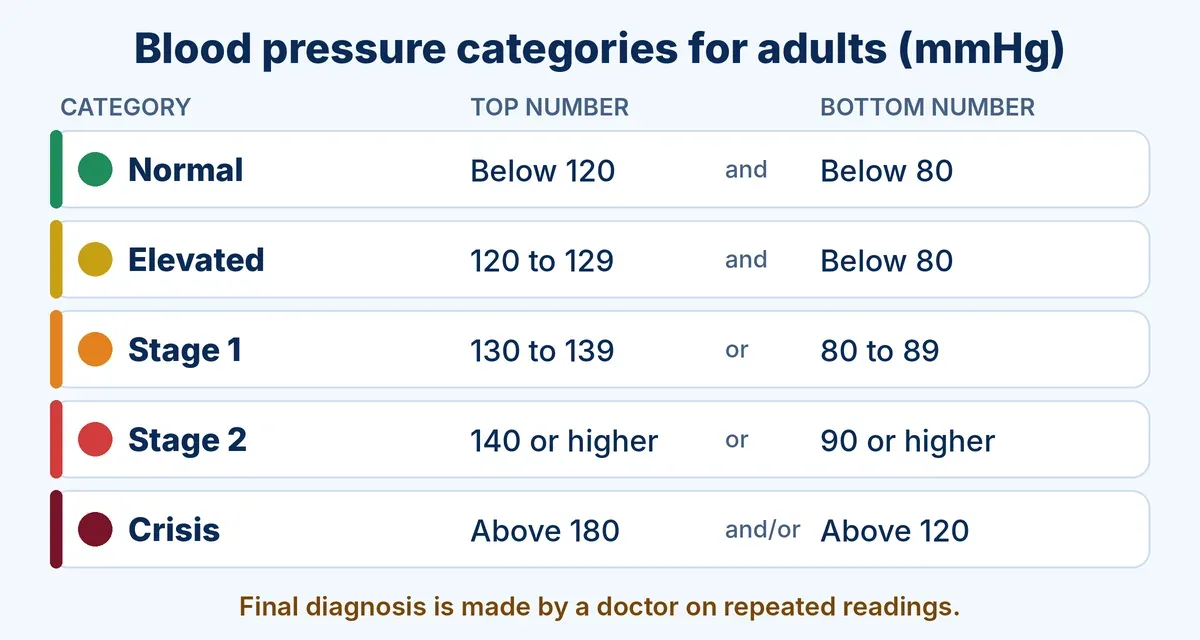
Adult blood pressure categories as described by the American Heart Association.
High Blood Pressure Symptoms: Why It Stays Silent
Most people with high blood pressure have no symptoms at all, even when readings are quite high. A headache, a flushed face or nosebleeds are not reliable signs. The only dependable way to know is to measure.
Warning signs that need urgent care
If a reading is above 180/120 mmHg, rest for five minutes and measure again. If it is still that high, contact your doctor right away. Go to the nearest emergency department without waiting if a very high reading comes with chest pain, shortness of breath, weakness or numbness, trouble speaking, vision changes or severe headache. Our guide on the signs of an unhealthy heart lists other symptoms that should not be ignored.
How High Blood Pressure Harms the Heart
Think of the heart as a pump working against a tighter and tighter pipe. Over the years this causes several problems:
- Thickened heart muscle: the left ventricle thickens to cope with the extra load, and a thick muscle becomes stiff and gets less blood supply.
- Coronary artery disease: high pressure damages the inner lining of the arteries and speeds up the build-up of fatty plaque, which can end in a heart attack.
- Heart failure: a tired, stiff heart may stop pumping well. Read more about congestive heart failure.
- Irregular heartbeat: an enlarged heart chamber can trigger rhythm problems such as atrial fibrillation.
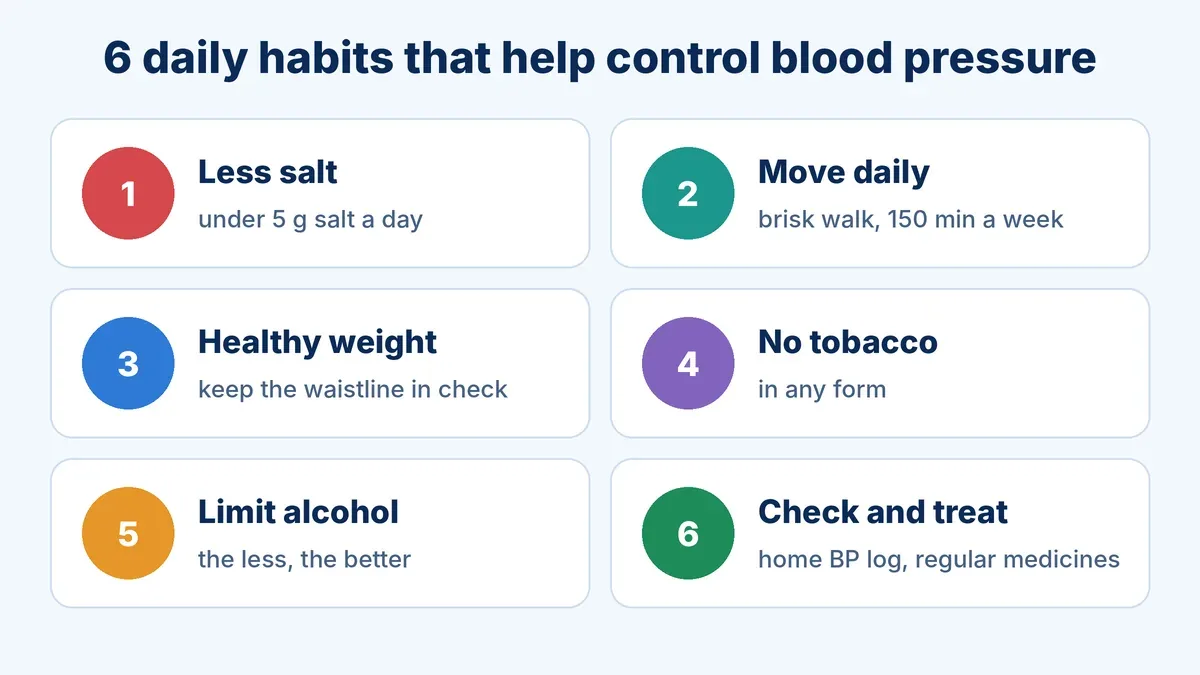
Long-term high blood pressure can harm several organs, not only the heart.
What Causes High Blood Pressure?
In most adults no single cause is found. Several factors add up:
- Eating too much salt, and processed or packaged food
- Being overweight or having a large waistline
- Little physical activity
- Tobacco use and heavy alcohol intake
- Long-term stress and poor sleep
- Diabetes, kidney disease and high cholesterol
- Family history and increasing age
Less often, blood pressure is raised by another condition, such as kidney or hormone problems, or by certain medicines. This is more likely when hypertension starts at a young age or is hard to control, and a doctor can check for it.
The cholesterol link
High blood pressure and high cholesterol often occur together, and each makes the other more dangerous for the arteries. Learn more in our article on cholesterol and heart disease.
How to Check Your Blood Pressure Correctly
Readings taken at home, together with clinic readings, help your doctor decide the right treatment. For a reliable reading:
- Use a validated upper-arm automatic monitor with a cuff of the right size.
- Sit quietly for five minutes with your back supported, feet flat and arm resting at heart level.
- Avoid tea, coffee, smoking and exercise for 30 minutes before measuring.
- Take two readings a minute apart, at the same times each day, and write them down.
- Bring the log to every doctor visit.
How Is High Blood Pressure Treated?
Lifestyle changes
These are the foundation of treatment, even if you also take tablets.
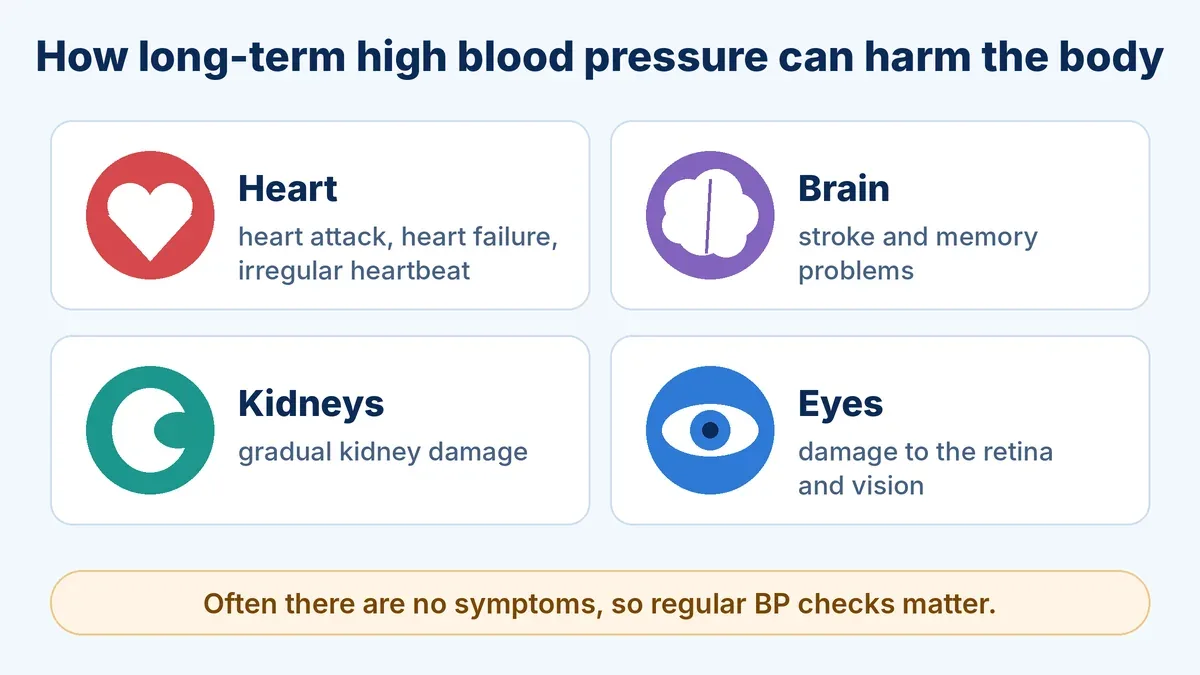
Six everyday habits that support better blood pressure control.
- Cut down salt: the WHO advises less than 5 g of salt (about one teaspoon) a day. In Indian homes, pickles, papad, namkeen, chips and packaged snacks add a lot of hidden salt.
- Move every day: aim for about 150 minutes of brisk walking or similar activity each week, if your doctor says it is safe for you. See how regular exercise improves heart health.
- Eat for your heart: more vegetables, fruit, pulses and whole grains. Our heart-healthy diet guide has simple ideas.
- Keep a healthy weight and avoid tobacco in every form.
- Limit alcohol and manage stress and sleep.
Medicines
If lifestyle changes are not enough, or if your risk is high, your doctor may prescribe one or more blood pressure medicines. Common groups include ACE inhibitors, ARBs, calcium channel blockers and diuretics. The choice depends on your age, kidney function, other illnesses and side effects. Take them regularly, even when you feel well, and do not stop or change a dose on your own. If you notice dizziness, swelling or a persistent cough, tell your doctor rather than skipping tablets.
When Should You See a Cardiologist?
Book a consultation if your readings stay high despite treatment, if you need several medicines, if you have chest pain or breathlessness, or if you have high blood pressure along with diabetes, kidney disease or a family history of heart disease. Regular checks are also sensible after the age of 30 even without any complaint, and sooner if you have risk factors. Young adults with high blood pressure should be assessed carefully; see our article on heart attack in young adults.
Heart Care for Blood Pressure Patients in Jaipur
Dr. Prashant Dwivedi is an interventional and structural heart cardiologist practising at the Eternal Heart Care Centre and Research, Jaipur. A visit usually includes a blood pressure review, an ECG and, when needed, an echocardiogram or other heart tests, followed by a plan that you can follow at home. For overall prevention tips, read 8 tips for a stronger heart, or book an appointment.
Frequently Asked Questions
What is a normal blood pressure?
For most adults, a reading below 120/80 mmHg is considered normal. Readings between 120 and 129 on top, with a bottom number below 80, are called elevated and are a signal to improve lifestyle habits.
Can high blood pressure be cured?
In most people it cannot be cured, but it can be controlled. Weight loss, less salt and regular activity can lower readings considerably, and some people need medicines for life. Good control greatly reduces the risk of heart attack and stroke.
Can high blood pressure cause a heart attack?
Yes. Long-standing high pressure damages the artery walls and speeds up plaque formation, which raises the risk of a heart attack. It also increases the risk of heart failure and stroke.
Can I stop my blood pressure tablets once my readings are normal?
No. Normal readings usually mean that the medicine is working. Stopping it can push the pressure up again. Any change should be made only by your doctor.
Does stress cause high blood pressure?
Stress can raise blood pressure for a short time, and long-term stress may encourage habits such as overeating, smoking or poor sleep that raise it further. Managing stress is useful, but it does not replace measuring blood pressure and taking treatment when it is advised.
This article is for general educational purposes only and does not replace personal medical advice, diagnosis or treatment. Please consult a qualified doctor about your own condition. In an emergency, go to the nearest hospital.
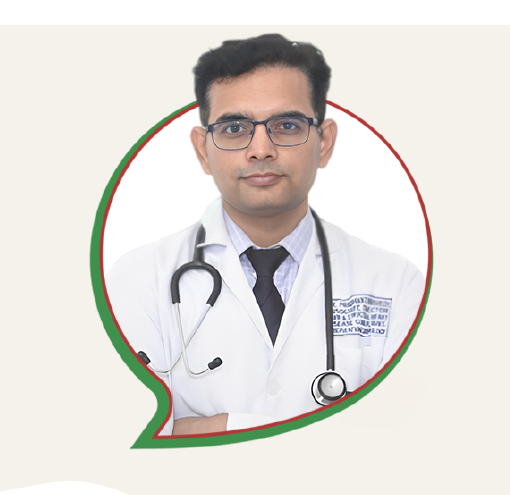
Dr. Prashant Dwivedi
Interventional and Structural Heart Cardiologist. Director of the TAVR and Structural Heart Program, Eternal Hospital, Jaipur.