Smoking and heart disease are strongly linked. Smoking damages the blood vessels, makes blood more likely to clot and speeds up the build-up of plaque, which can lead to a heart attack or stroke. The encouraging news is that your heart starts to recover after you quit, at any age. This guide explains how smoking harms the heart, what quitting gives back, and practical ways to stop.
Key points at a glance
- Smoking raises the risk of coronary heart disease and stroke 2 to 4 times.
- Even a few cigarettes a day can harm the heart, and secondhand smoke harms others.
- Heart attack risk falls sharply within 1 to 2 years of quitting.
- Counselling plus medicine works better than either alone, and quitting helps even after a heart attack.
Smoking and Heart Disease: How Does Smoking Harm the Heart?
According to the CDC, smoking can raise triglycerides and lower HDL ("good") cholesterol, make the blood sticky and more likely to clot, damage the cells lining the blood vessels, increase plaque build-up, and thicken and narrow the blood vessels. This is why smoking is linked to atherosclerosis, coronary heart disease (including heart attack and sudden cardiac death), stroke, disease of the leg arteries and aortic aneurysm.
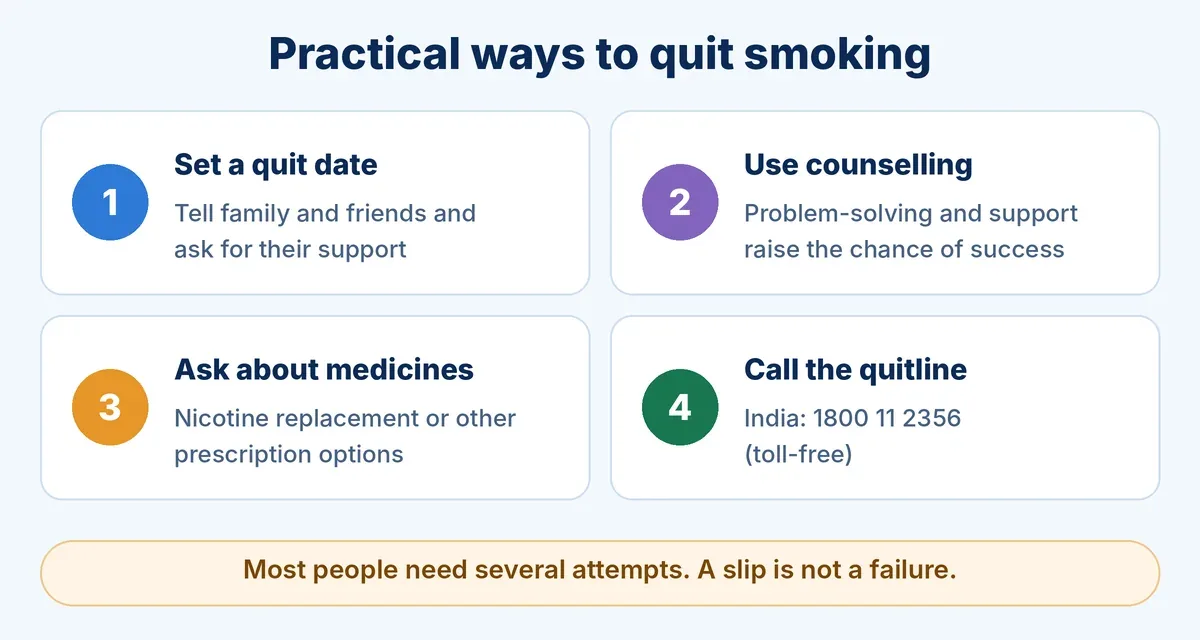
Smoking harms the heart and blood vessels in several ways at once.
Is there a "safe" number of cigarettes?
No. The CDC notes that smoking increases the risk of coronary heart disease and of stroke 2 to 4 times compared with not smoking, and that even people who smoke fewer than five cigarettes a day can show early signs of cardiovascular disease. To understand the cholesterol effect, read about the lipid profile test and cholesterol and heart disease.
What about secondhand smoke?
The CDC states that non-smokers exposed to secondhand smoke at home or work have a 25% to 30% higher risk of heart disease and a 20% to 30% higher risk of stroke, and that even brief exposure can damage blood vessels and make blood stickier. Keeping your home and car smoke-free protects your family's hearts.
Smoking and Your Risk of Heart Attack
Because smoking affects the vessel walls and clotting together, it is a major risk factor for heart attack, including in younger people. Read our guides on heart attack symptoms, heart attack in young adults and silent heart attack. Smoking adds to other risks too, such as high blood pressure and diabetes.
Benefits of Quitting Smoking for the Heart
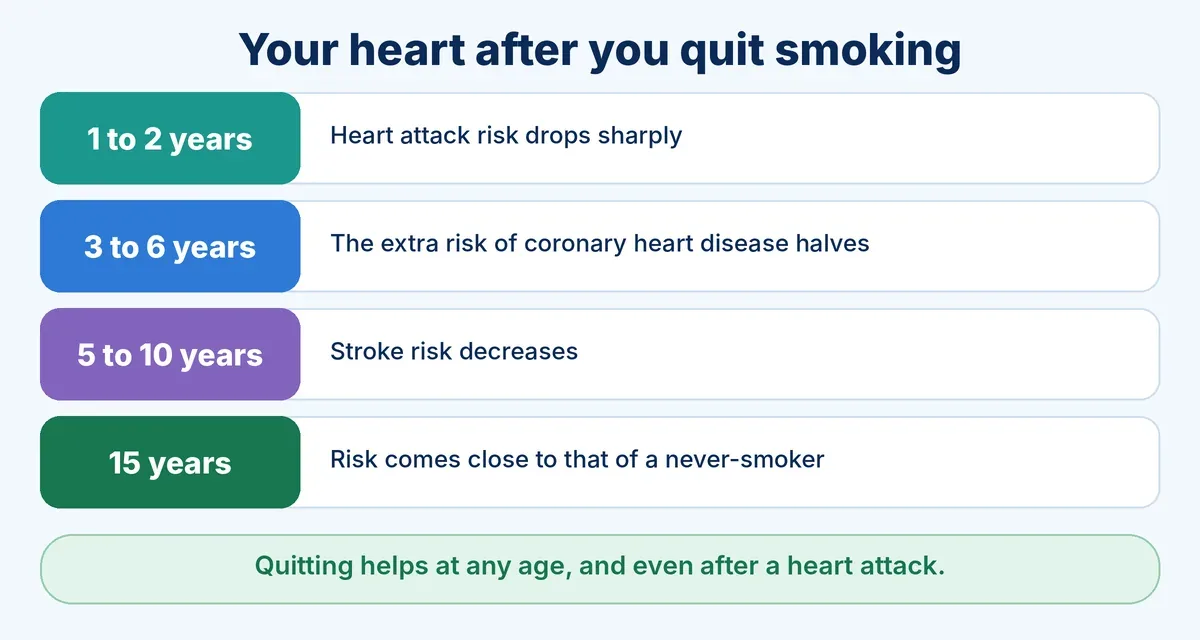
The heart begins to recover soon after you quit, and the benefit keeps growing.
The CDC says quitting lowers inflammation and clot risk, improves HDL cholesterol, slows atherosclerosis and reduces the risk of coronary heart disease and stroke. It may also reduce the risk of atrial fibrillation, sudden cardiac death and heart failure. Compared with continuing to smoke, heart attack risk drops sharply within 1 to 2 years, the added coronary risk halves in 3 to 6 years, stroke risk decreases in 5 to 10 years, and after 15 years the risk approaches that of someone who never smoked. People who already have heart disease and quit lower their risk of another heart attack and of dying from heart disease. These benefits apply at any age, however long you have smoked. See also atrial fibrillation, heart failure and cardiac rehabilitation.
How to Quit Smoking: Practical Steps
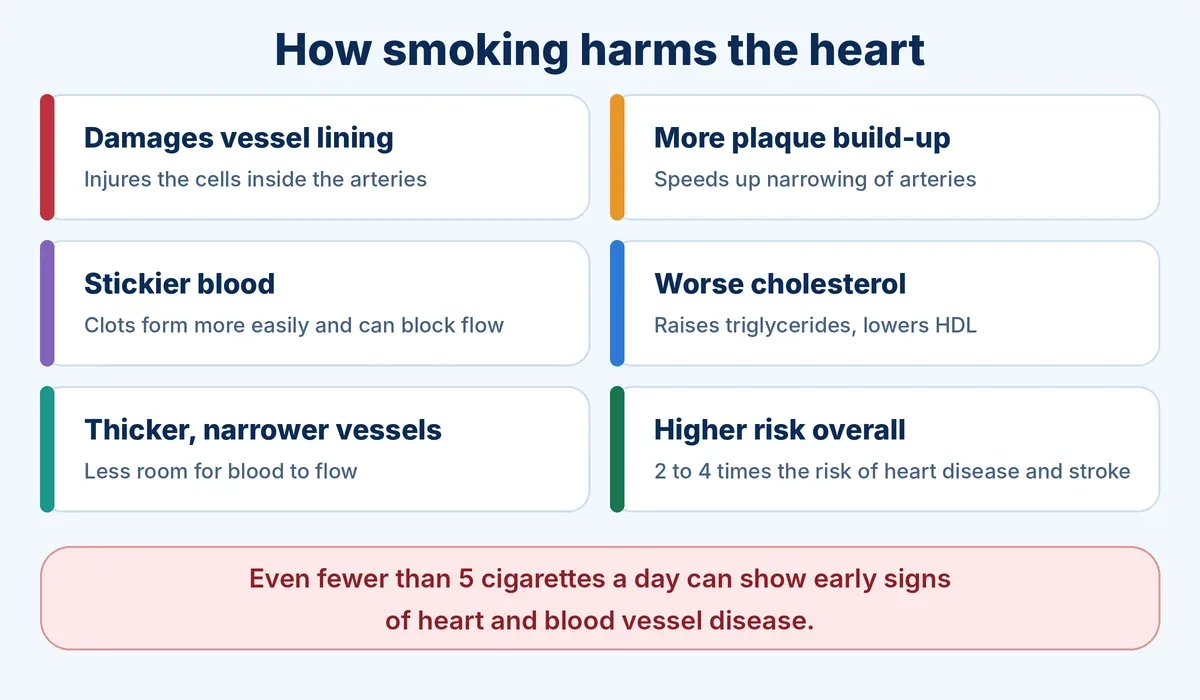
Counselling and medicine together work better than either one alone.
- Prepare: set a quit date, tell family and friends, and plan for cravings.
- Combine counselling and medicine: the US treatment guideline summarised by the AHRQ says counselling combined with medication works better than either alone, and that practical problem-solving and social support are the most effective counselling parts.
- Ask about medicines: options include nicotine replacement (patch, gum, lozenge) and prescription medicines. According to the same guideline, nicotine replacement, particularly the patch, is considered safe in people with heart disease, but ask your cardiologist before starting any medicine.
- Use the national quitline: in India, the toll-free National Quitline 1800 11 2356 offers counselling to tobacco users who want to quit, according to WHO India.
- Expect setbacks: most people need several attempts, and most relapses happen in the first 2 weeks. A slip is not a failure, so try again.
- Move more: walking and exercise help with weight and cravings. See how exercise improves heart health and stress and heart health.
When to See a Cardiologist
If you smoke or have smoked for years, a heart check-up helps understand your risk. See a cardiologist for chest discomfort, breathlessness, palpitations or leg pain on walking. Chest pain with sweating or breathlessness is an emergency. Read the warning signs of a cardiac emergency and the signs of an unhealthy heart.
Heart Care in Jaipur
Dr. Prashant Dwivedi is an interventional and structural heart cardiologist practising at the Eternal Heart Care Centre and Research, Jaipur. A heart check-up for smokers and ex-smokers can show your risk and guide prevention. You can book an appointment. For sudden chest pain, go to the nearest hospital emergency.
Frequently Asked Questions
How does smoking cause heart disease?
Smoking damages the lining of the blood vessels, raises triglycerides, lowers HDL cholesterol, makes blood stickier and speeds up plaque build-up, which narrows the arteries.
How soon does the heart recover after quitting?
According to the CDC, heart attack risk drops sharply within 1 to 2 years of quitting, and after 15 years the coronary heart disease risk approaches that of someone who never smoked.
Is it too late to quit after a heart attack?
No. People with coronary heart disease who quit lower their risk of another heart attack and of dying from heart disease, at any age.
Is smoking only a few cigarettes a day safe?
No. Even people who smoke fewer than five cigarettes a day can show early signs of cardiovascular disease.
Is nicotine replacement safe for people with heart disease?
The treatment guideline summarised by the AHRQ considers nicotine replacement, particularly the patch, safe in people with cardiovascular disease. Still, speak to your cardiologist before starting any quit-smoking medicine.
This article is for general educational purposes only and does not replace personal medical advice, diagnosis or treatment. Please consult a qualified cardiologist about your own condition. In an emergency, go to the nearest hospital.
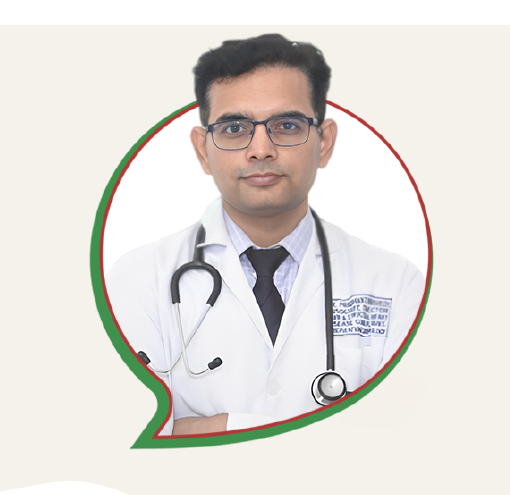
Dr. Prashant Dwivedi
Interventional and Structural Heart Cardiologist. Director of the TAVR and Structural Heart Program, Eternal Hospital, Jaipur.