Obesity and heart health are closely connected. Carrying extra weight, especially around the belly, is linked with a higher risk of heart attack, stroke and other heart problems. New research suggests that where the fat sits matters as much as how much you weigh. This guide explains how excess weight affects the heart, why waist size can be a better clue than BMI, and practical steps towards a healthier weight.
Key points at a glance
- Excess weight is a known risk factor for heart disease, and fat around the midsection is the most concerning.
- BMI cannot show where fat is stored, so waist measurements add useful information.
- Heart risk can be high in people with a normal BMI but a large waist.
- At least 150 minutes of moderate activity a week and a heart-healthy diet help reduce belly fat.
Obesity and Heart Health: What Is the Link?
According to a Harvard Health summary of a large study, excess weight is a known risk factor for heart disease, but fat location may matter more than total weight, and fat around the midsection is the most concerning. The research pooled data from 15 long-running studies and followed more than 259,000 adults without known heart disease for about 20 years. Among people with normal or overweight BMI, those with high waist measurements had a risk of most heart outcomes about 15% to 50% higher than normal-weight people with low waist measurements. People with obesity but a small waist did not have a higher heart-related risk than people of normal weight. This was an observational study, so it shows an association and does not prove that reducing belly fat lowers risk.
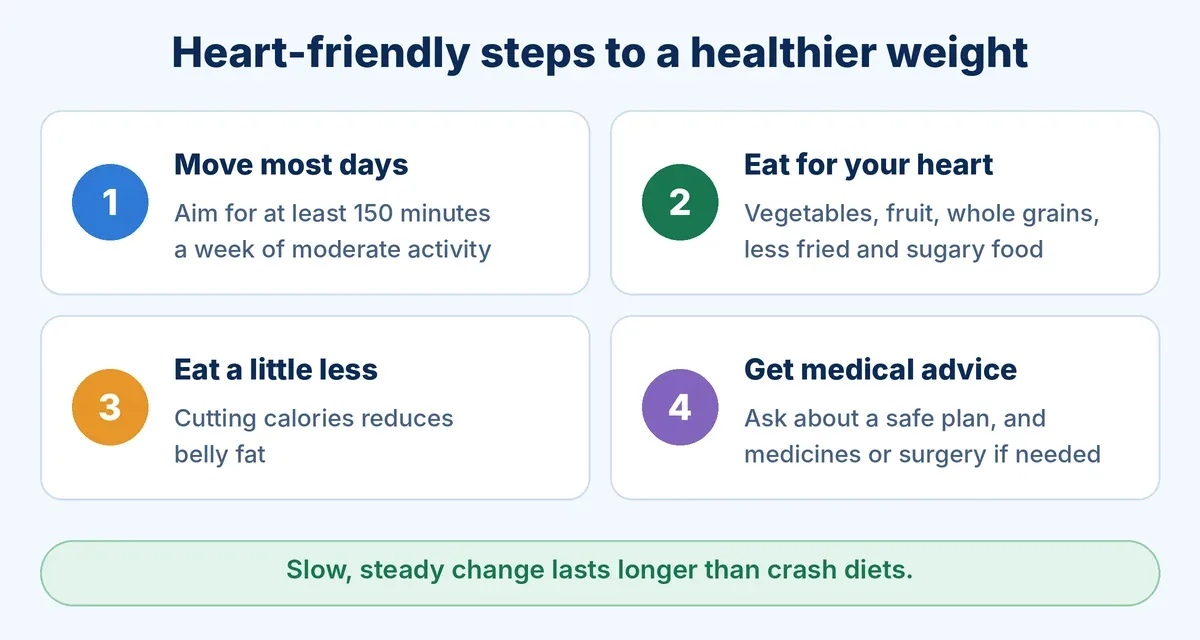
Where fat is stored matters. Belly fat is the most concerning, even when BMI looks normal.
Why belly fat is a special concern
The American Heart Association describes fat around the midsection and organs (visceral fat) as a risk marker for heart disease even when BMI is in the healthy range. It is also linked to fat build-up around the liver, which can lead to fatty liver disease. The statement adds that people with excess weight tend to have cardiovascular events at younger ages.
How to Check Your Weight Risk: BMI and Waist Size
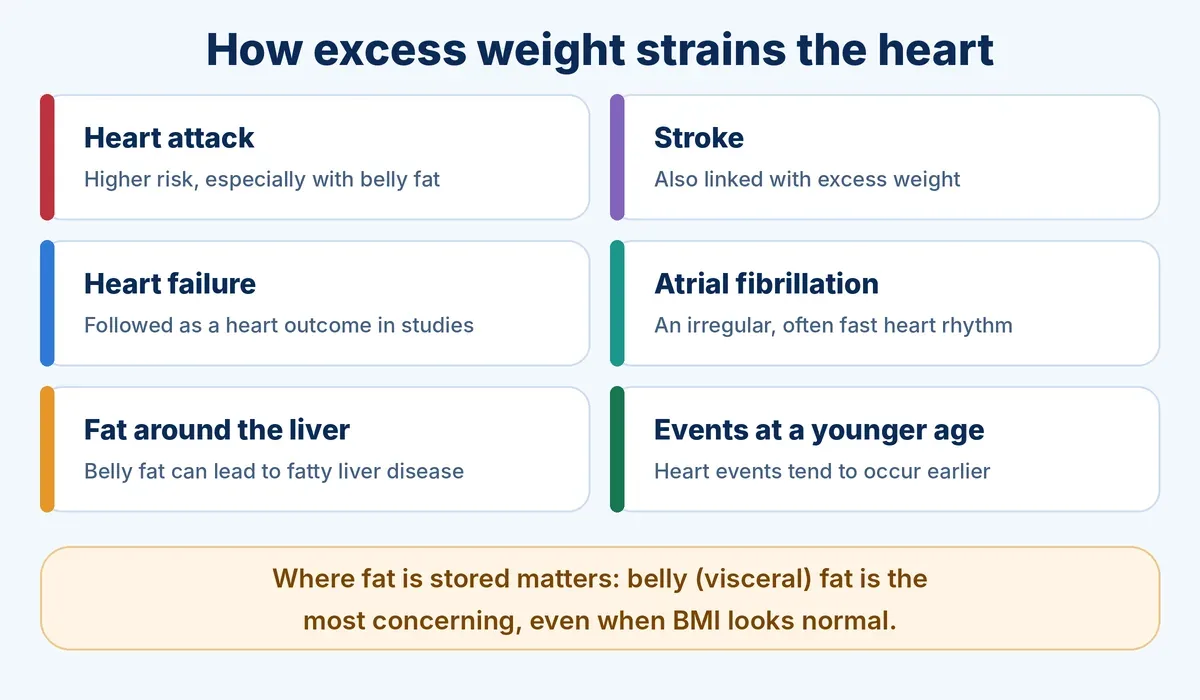
BMI alone cannot show where fat is stored, so waist measurements add useful information.
The AHA lists BMI categories of 25 to 29.9 for overweight and 30 or higher for obesity, and recommends checking abdominal measurements (waist circumference, waist-to-height ratio or waist-to-hip ratio) along with BMI during routine care. For Asians, a WHO expert consultation reported that a substantial share of Asians have a high risk of type 2 diabetes and heart disease below the usual BMI of 25, and identified extra points along the BMI scale (23, 27.5, 32.5 and 37.5) for public health action. Population-specific cut-offs were left to individual countries, so ask your doctor to interpret your numbers.
Weight, Blood Pressure, Cholesterol and Diabetes
Excess weight often goes hand in hand with other heart risks. Read our guides on high blood pressure and your heart, the lipid profile test, cholesterol and heart disease and diabetes and heart disease. Heart conditions such as atrial fibrillation and heart failure are also followed in studies of weight and heart health.
How to Reach a Healthier Weight for Your Heart
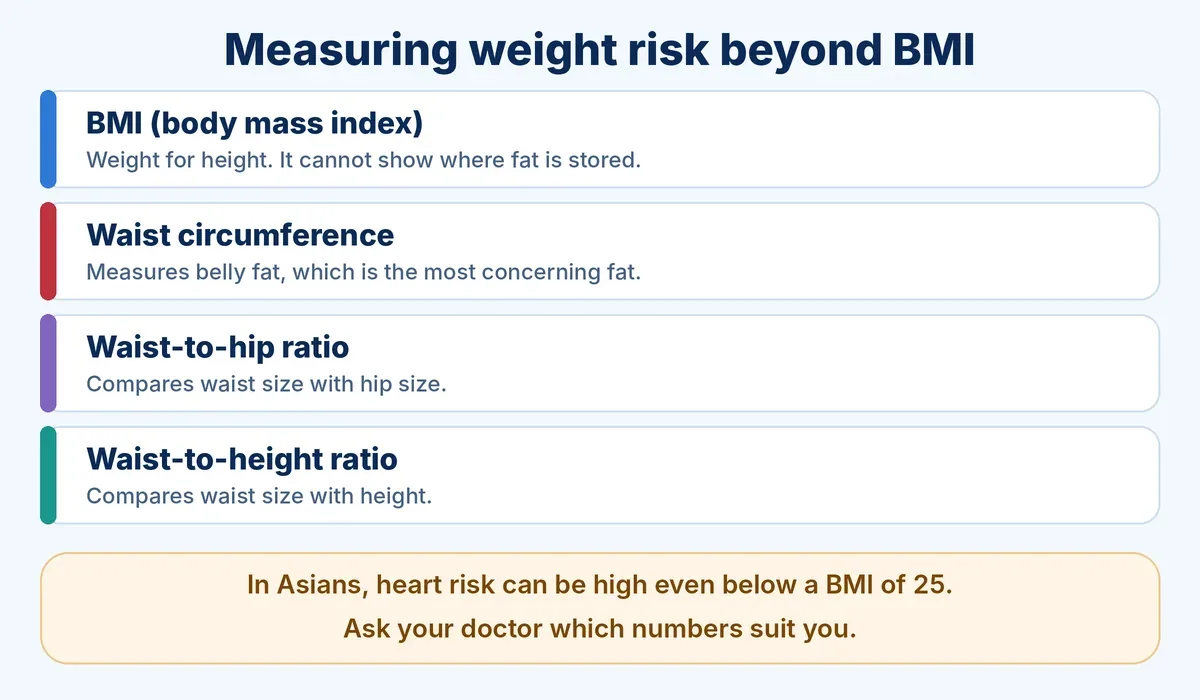
Slow, steady changes in food and activity are easier to keep up than crash diets.
- Be active: Harvard Health advises at least 150 minutes of moderate-intensity physical activity a week. The AHA statement says aerobic exercise is the most beneficial activity for abdominal obesity, with about 150 minutes a week possibly enough, and that exercise can reduce abdominal fat even without much weight loss. See how regular exercise improves heart health and examples of cardiovascular exercise.
- Eat for your heart: follow a heart-healthy eating pattern, and the AHA says reducing calorie intake reduces abdominal fat. See heart-healthy diet tips for every age.
- Avoid tobacco and manage stress. Read about smoking and heart disease and stress and heart health.
- Ask for medical advice: your doctor can set a safe plan. The AHA statement notes that bariatric surgery is linked to lower coronary artery disease risk than non-surgical weight loss in studies, while lifestyle programmes alone have not yet shown fewer coronary events. Medicines or surgery are decisions for you and your doctor, based on your health.
Lifestyle changes improve metabolic risk factors such as blood pressure and cholesterol, though the AHA notes that more research is needed on which interventions improve heart outcomes. Aim for steady, sustainable change rather than a crash diet.
When to See a Cardiologist
If you have excess weight, especially around the waist, a heart check-up is a good idea, particularly if you also have high blood pressure, diabetes, high cholesterol or a family history of heart disease. Also see a cardiologist for breathlessness on mild effort, chest discomfort, palpitations or swollen feet. Chest pain with sweating or breathlessness is an emergency. Read the warning signs of a cardiac emergency and the signs of an unhealthy heart.
Heart Care in Jaipur
Dr. Prashant Dwivedi is an interventional and structural heart cardiologist practising at the Eternal Heart Care Centre and Research, Jaipur. A heart check-up shows how your weight, blood pressure, cholesterol and blood sugar affect your heart, and helps plan prevention. You can book an appointment. For sudden chest pain, go to the nearest hospital emergency.
Frequently Asked Questions
Does being overweight cause heart disease?
Excess weight is a known risk factor for heart disease, but it is not the only one. Blood pressure, cholesterol, diabetes, smoking and family history also matter, and where the fat is stored seems to matter too.
Can I have a normal BMI and still be at risk?
Yes. People with a normal or overweight BMI but a large waist had about 15% to 50% higher risk of most heart outcomes in a large study summarised by Harvard Health. Waist measurements help show this.
Is belly fat worse than fat elsewhere?
Fat around the midsection and organs is considered the most concerning type for the heart, according to Harvard Health and the American Heart Association.
How much exercise helps reduce belly fat?
The AHA statement says about 150 minutes of aerobic exercise a week may be enough to benefit abdominal obesity, with no added benefit from longer sessions. Ask your doctor what is safe for you.
Should I take weight-loss medicines or consider surgery?
That is a decision for you and your doctor. Surgery and medicines are options for some people, and your doctor will weigh the benefits and risks in your case.
This article is for general educational purposes only and does not replace personal medical advice, diagnosis or treatment. Please consult a qualified cardiologist about your own condition. In an emergency, go to the nearest hospital.

Dr. Prashant Dwivedi
Interventional and Structural Heart Cardiologist. Director of the TAVR and Structural Heart Program, Eternal Hospital, Jaipur.