Diabetes and heart disease often go together. High blood sugar over many years can damage the blood vessels and nerves that supply the heart, and people with diabetes often also have high blood pressure, abnormal cholesterol and excess weight. The good news is that most of these risks can be controlled. This guide explains why diabetes raises heart risk, the warning signs, and the steps that protect your heart.
Key points at a glance
- Adults with diabetes are nearly twice as likely to have heart disease or stroke as adults without diabetes, and tend to develop it at a younger age.
- Blood pressure, cholesterol, weight, smoking and kidney health all matter, not just blood sugar.
- Diabetes can damage nerves, so a heart attack may cause little or no chest pain.
- Medicines should not be stopped without medical advice.
Diabetes and Heart Disease: What Is the Link?
According to the NIDDK, high blood glucose can damage blood vessels and the nerves that control the heart and blood vessels, which can lead to heart disease over time. Adults with diabetes are nearly twice as likely to have heart disease or a stroke as adults without diabetes. The American Heart Association adds that people with type 2 diabetes are more likely to develop and die from heart attacks, strokes and heart failure, and that the risk stays higher even when glucose is controlled. This is why the whole picture, not only sugar, needs attention.
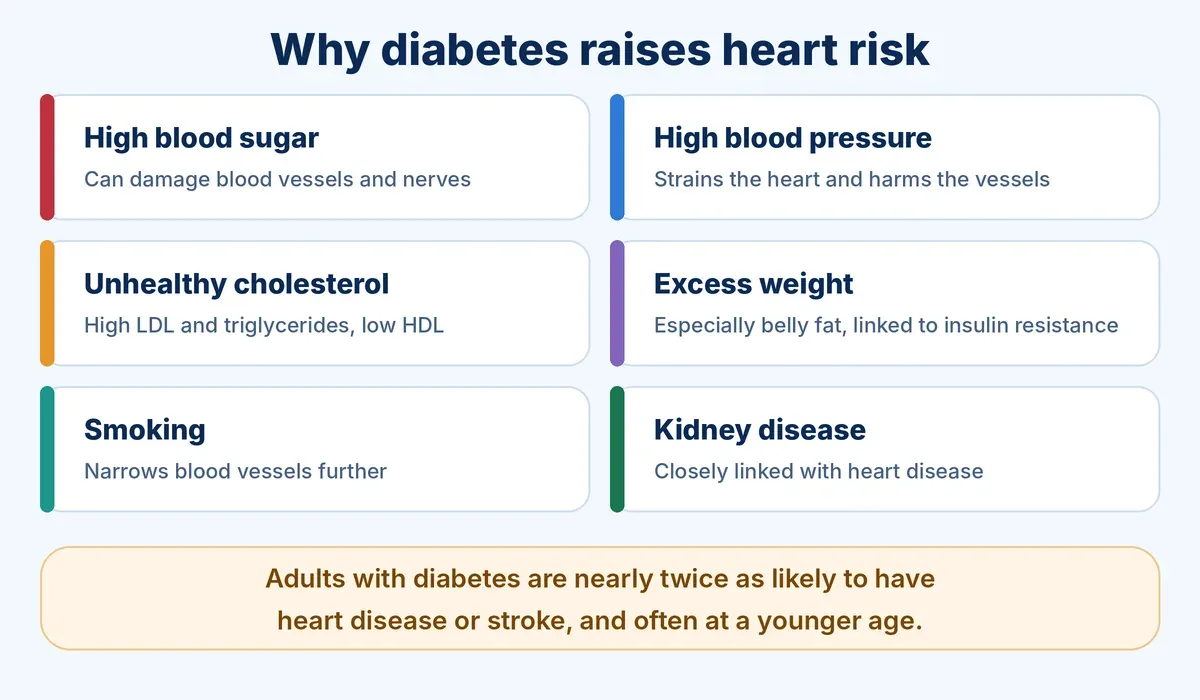
Diabetes rarely acts alone. Several linked risk factors add up and strain the heart.
Which Risk Factors Add to the Danger?
- High blood pressure strains the heart and damages the vessels, eyes and kidneys. Read about high blood pressure and your heart.
- Unhealthy cholesterol: high LDL and triglycerides and low HDL are common with diabetes. See the lipid profile test and cholesterol and heart disease.
- Excess weight and belly fat. The NIDDK describes excess belly fat as a waist above 40 inches in men and above 35 inches in women.
- Smoking, which narrows blood vessels further.
- Kidney disease, which is closely linked to heart disease. The NIDDK says about 40% of people with diabetes develop it.
- Inactivity and a family history of heart attack at an early age. See heart attack in young adults.
Warning Signs: Diabetes Can Hide a Heart Attack
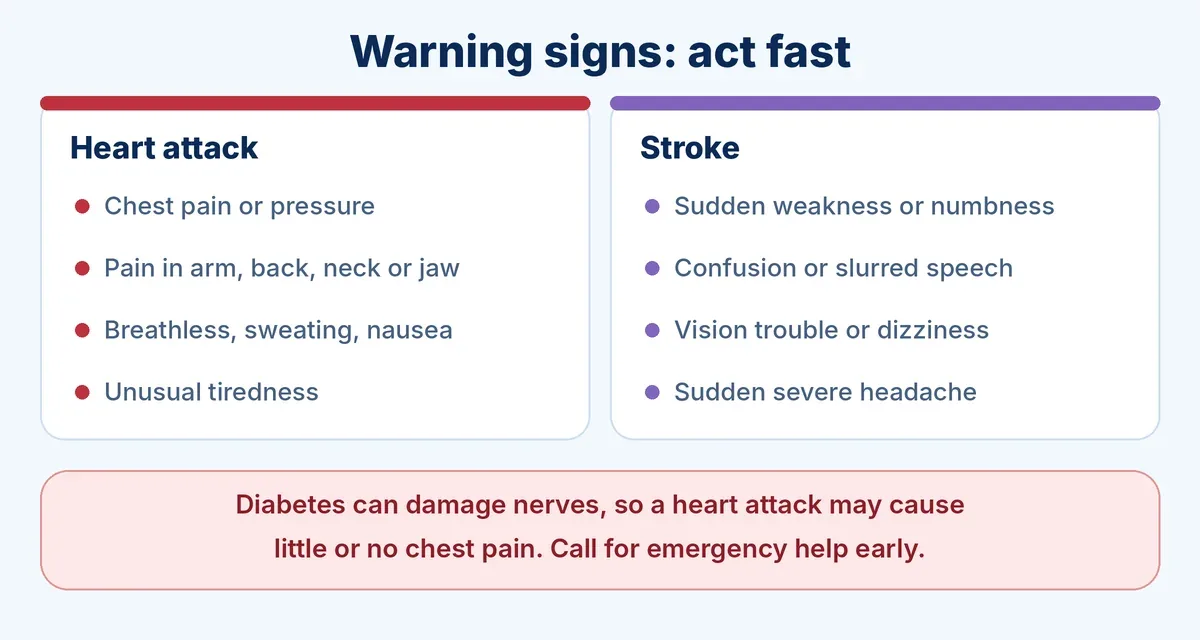
With diabetes, a heart attack may cause little or no chest pain, so act on other warning signs.
The NIDDK lists these warning signs of a heart attack: chest pain or pressure lasting more than a few minutes or that goes away and returns, pain in the arms, shoulders, back, neck or jaw, shortness of breath, sweating, light-headedness, nausea or unusual tiredness. People with diabetes-related nerve damage may feel no chest pain at all. For stroke, watch for sudden weakness or numbness on one side, confusion or trouble speaking, dizziness or loss of balance, vision trouble and a sudden severe headache. Call for emergency help (112 in India) for any of these. Read our guides on heart attack symptoms, silent heart attack and chest pain: heart or gas.
How to Protect Your Heart When You Have Diabetes
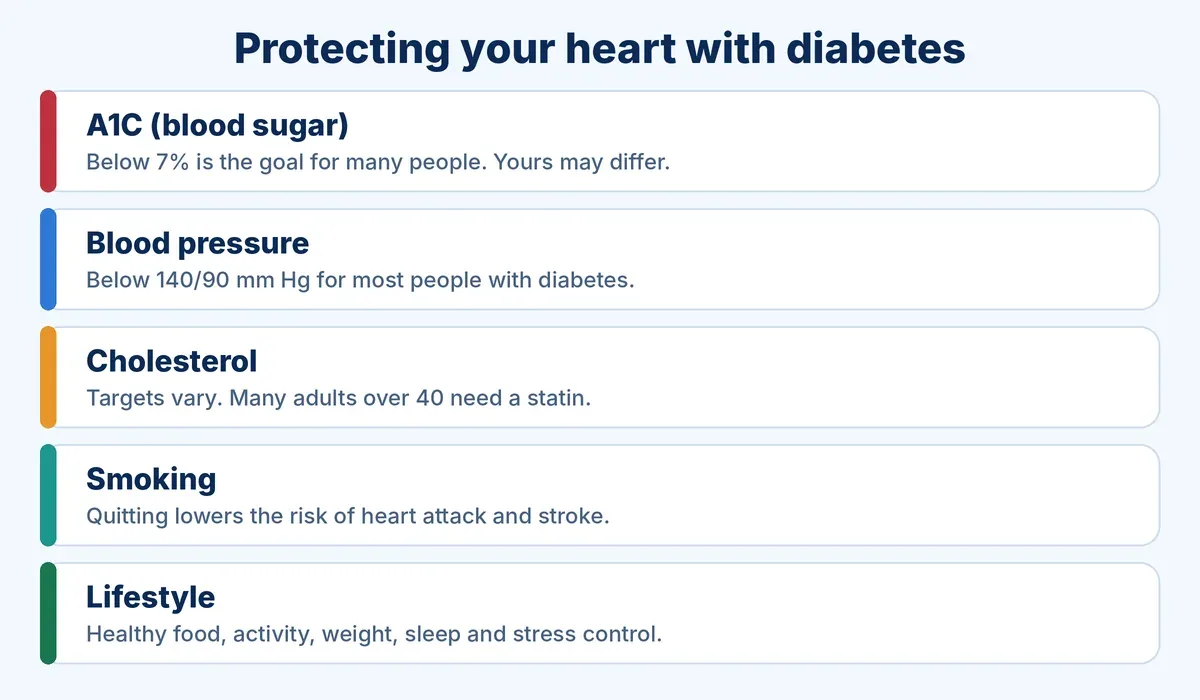
These are general goals. Your doctor will set targets that suit you.
- Blood sugar (A1C): the NIDDK says the goal is below 7% for many people, though some need a different target.
- Blood pressure: the goal is below 140/90 mm Hg for most people with diabetes, according to the NIDDK.
- Cholesterol: targets vary. The NIDDK says adults over 40 may need a statin, and some people with very high LDL need one earlier.
- Quit smoking: it lowers the risk of heart attack, stroke, and nerve, kidney and eye problems.
- Eat well: follow a healthy eating plan. See heart-healthy diet tips.
- Stay active: the American Heart Association recommends at least 150 minutes of moderate aerobic activity or 75 minutes of vigorous activity a week, plus muscle-strengthening on at least two days. See how exercise improves heart health.
- Weight, sleep and stress: aim for a healthy weight, enough sleep and a way to manage stress. See stress and heart health.
Medicines
The NIDDK notes that statins and certain diabetes medicines can lower the risk of heart attack and stroke in some people. Aspirin is not safe for everyone, so ask your doctor before starting it. Do not stop any medicine without medical advice.
When to See a Cardiologist
If you have diabetes, regular check-ups of blood pressure, cholesterol and kidney function help your doctor judge your heart risk, and your A1C, blood pressure and cholesterol results help decide whether you need heart tests or a cardiologist referral. See a cardiologist for chest discomfort, breathlessness on effort, palpitations or swelling of the feet. Learn about palpitations, tests such as an echocardiogram, and the signs of an unhealthy heart.
Heart Care for Diabetes in Jaipur
Dr. Prashant Dwivedi is an interventional and structural heart cardiologist practising at the Eternal Heart Care Centre and Research, Jaipur. If you have diabetes, a heart check-up can show your risk and help plan prevention together with your diabetes doctor. You can book an appointment. For sudden chest pain or stroke signs, go to the nearest hospital emergency.
Frequently Asked Questions
Does diabetes cause heart disease?
Diabetes raises the risk of heart disease. High blood sugar can damage blood vessels and nerves, and diabetes often comes with other risks such as high blood pressure and cholesterol.
Can I have a heart attack without chest pain if I have diabetes?
Yes. Diabetes-related nerve damage can reduce or remove chest pain. Breathlessness, sweating, nausea or unusual tiredness should also be taken seriously.
What blood pressure and A1C targets are advised with diabetes?
The NIDDK gives a goal of below 7% A1C for many people and below 140/90 mm Hg blood pressure for most, but targets differ between people. Your doctor will set yours.
Do all people with diabetes need a statin?
Not necessarily. The NIDDK says adults over 40 may need one, and some people with very high LDL need one earlier. Your doctor will decide based on your overall risk.
Should I take aspirin to protect my heart?
Not on your own. Aspirin is not safe for everyone, so ask your doctor before starting it.
This article is for general educational purposes only and does not replace personal medical advice, diagnosis or treatment. Please consult a qualified cardiologist about your own condition. In an emergency, go to the nearest hospital.
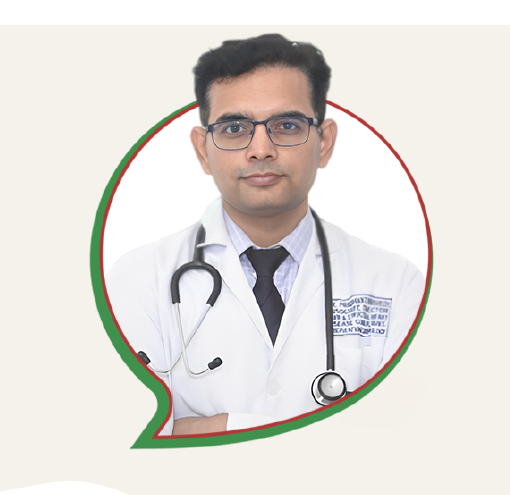
Dr. Prashant Dwivedi
Interventional and Structural Heart Cardiologist. Director of the TAVR and Structural Heart Program, Eternal Hospital, Jaipur.