A lipid profile test is a simple blood test that measures the fats in your blood, including total cholesterol, LDL, HDL and triglycerides. High cholesterol usually causes no symptoms, so this lipid profile test is often the only way to find out your risk before a heart attack or stroke happens. This guide explains how to prepare, how to read your report, and how often to repeat it.
Key points at a glance
- The test needs a small blood sample, usually taken from a vein in your arm.
- Your doctor will tell you whether you need to fast before the test.
- Lower LDL and triglycerides and higher HDL are generally better, but your target depends on your overall risk.
- Repeat testing depends on age and risk factors.
What Is a Lipid Profile Test?
A lipid profile, also called a lipid panel or cholesterol test, measures the amount of different fats in your blood. According to MedlinePlus, cholesterol is a waxy substance your body needs in small amounts, but too much of it can build up in the walls of the arteries and narrow them. To understand what these fats do, read our guide on cholesterol and heart disease.
What does the report measure?
- Total cholesterol: the overall amount of cholesterol in your blood.
- LDL cholesterol: often called "bad" cholesterol, because it can build up inside the arteries.
- HDL cholesterol: often called "good" cholesterol, because it helps carry cholesterol away from the arteries.
- Triglycerides: another type of fat in the blood. The body stores extra calories as triglycerides.
- Non-HDL cholesterol: total cholesterol minus HDL, which includes all the cholesterol that can harm the arteries. Some reports show it, and some also show VLDL, which is estimated from triglycerides.
Why Is a Lipid Profile Test Important for Your Heart?
Raised LDL cholesterol and triglycerides can lead to plaque in the arteries over the years, which raises the chance of a heart attack or stroke. Because you cannot feel high cholesterol, regular testing is the safest way to catch it early. People who have a heart attack without clear warning often had risk factors that a simple test could have shown. See our guides on silent heart attack and heart attack in young adults.
How to Prepare for a Lipid Profile Test
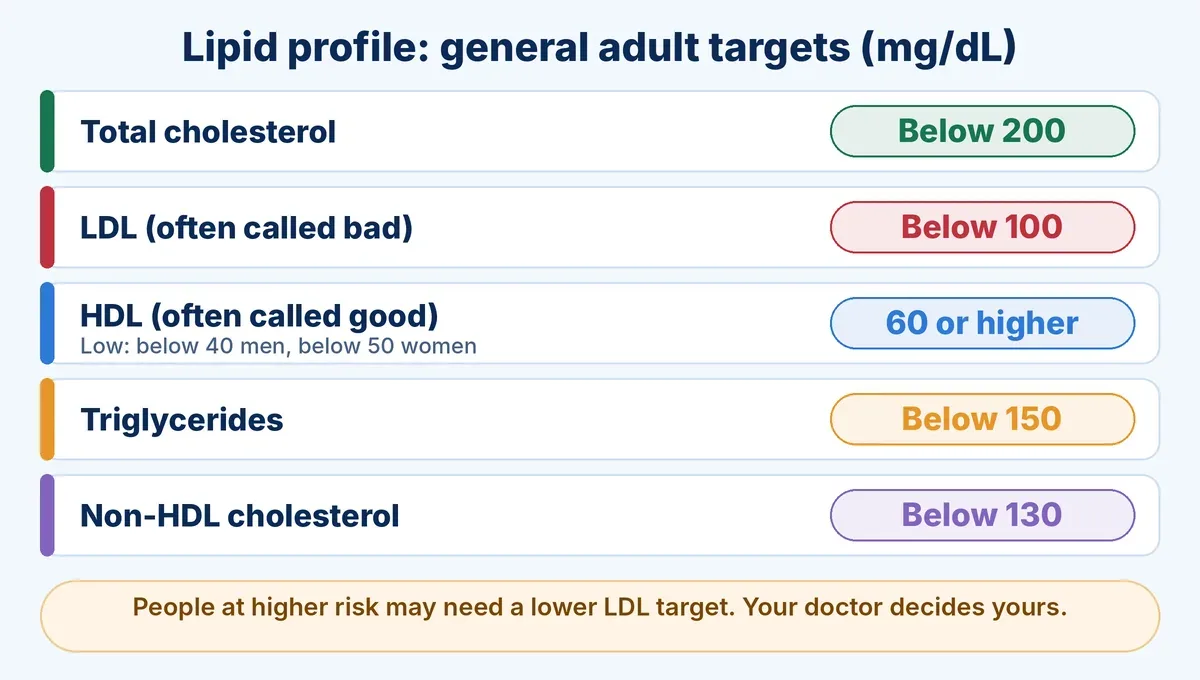
Follow the exact instructions given by your doctor or laboratory before the test.
- Ask whether you must fast. MedlinePlus notes that you may need to fast for 9 to 12 hours before some cholesterol tests, and your doctor or lab will tell you if this applies. If you do not fast when asked, some values, especially triglycerides and calculated LDL, may be less reliable.
- Tell your doctor about all medicines and supplements you take, including cholesterol-lowering tablets.
- Do not stop any medicine before the test unless your doctor tells you to.
- Book a morning appointment if you are fasting, so that the overnight fast is easier.
The blood draw is quick. The risks are small and may include a mild bruise, soreness at the site or, rarely, fainting.
How to Read Your Lipid Profile Results
Reports are usually given in mg/dL (milligrams per decilitre). The general adult targets listed by MedlinePlus are shown below. Your own lab may print slightly different reference ranges, so always compare your numbers with the ranges on your report.
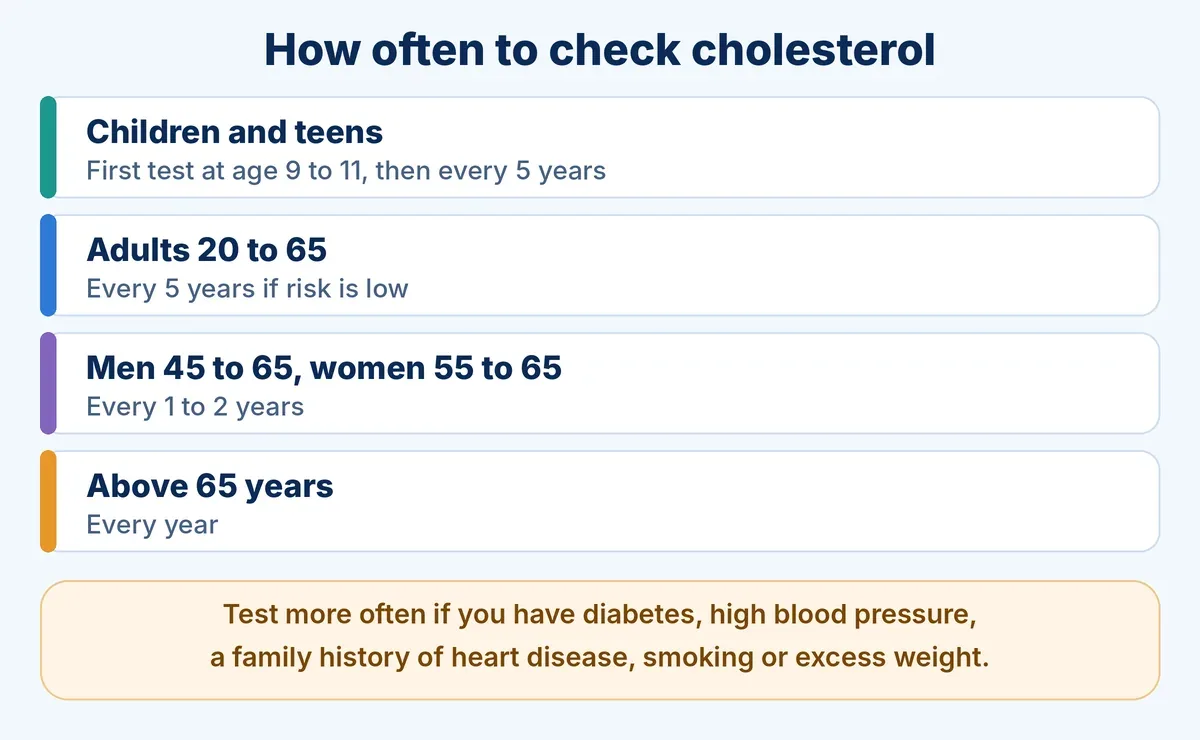
General adult targets only. Your own targets depend on your overall heart risk.
- Total cholesterol: below 200 mg/dL.
- LDL: generally below 100 mg/dL. People at higher risk, such as those with diabetes or other risk factors, may be advised a lower target, and people who have already had a heart attack or stroke may need an even lower one.
- HDL: 60 mg/dL or higher is best. Below 40 in men and below 50 in women is considered low.
- Triglycerides: below 150 mg/dL.
- Non-HDL cholesterol: below 130 mg/dL.
Why your own target may differ
These numbers are only a guide. Your cardiologist looks at your cholesterol together with your age, blood pressure, blood sugar, smoking, family history and any existing heart disease. Two people with the same LDL value can have very different risk and therefore different targets.
Calculated and directly measured LDL
Many labs do not measure LDL directly. They calculate an estimate from total cholesterol, HDL and triglycerides. In some situations your doctor may ask for a directly measured LDL instead.
How Often Should You Get a Lipid Profile Test?
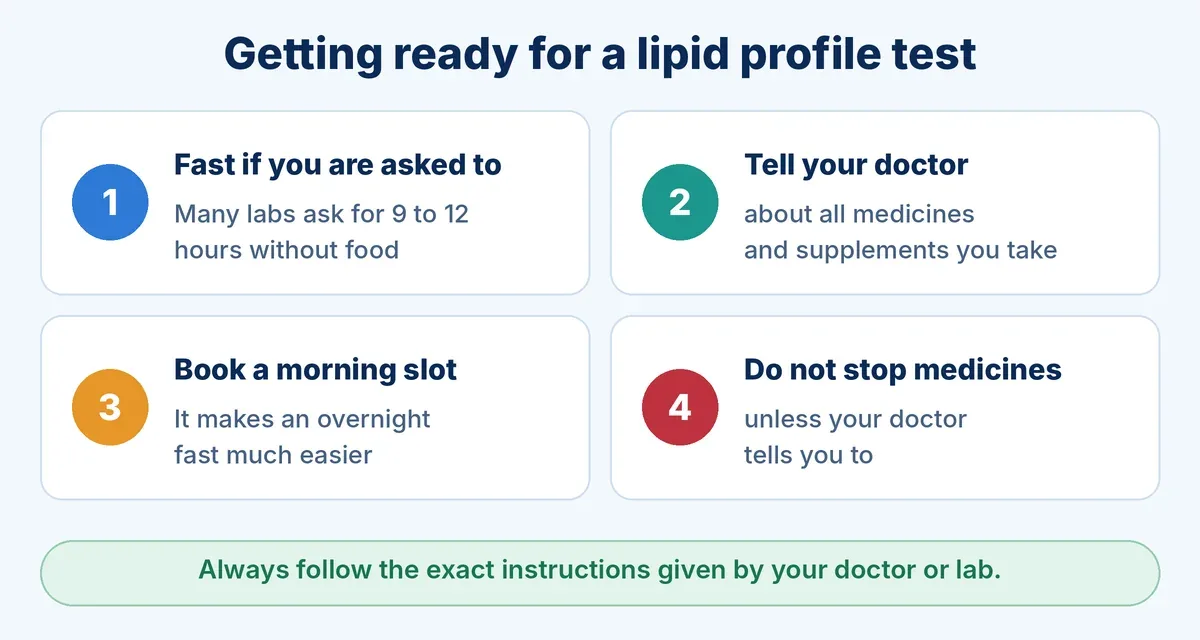
Testing is needed more often if you have diabetes, high blood pressure or a family history.
According to MedlinePlus, children should have a first test between the ages of 9 and 11 and then every 5 years, and earlier if there is a family history of high cholesterol or early heart disease. Adults aged 20 to 65 are generally advised testing every 5 years. Men aged 45 to 65 and women aged 55 to 65 may need it every 1 to 2 years, and people above 65 every year. Test more often if you have diabetes, high blood pressure, a family history of heart disease, smoking, excess weight or little physical activity. Read about high blood pressure and your heart as well.
What If Your Cholesterol Is High?
A single high reading does not mean you have heart disease, but it is a signal to act. Your doctor may suggest repeating the test and then plan the next steps.
- Food: choose more vegetables, fruit, whole grains and pulses, and cut back on fried food, sweets and foods high in saturated fat. See heart-healthy diet tips for every age.
- Activity: regular exercise helps lipids and weight. See how regular exercise improves heart health.
- Tobacco: quitting smoking lowers heart risk in many ways.
- Medicines: if lifestyle changes are not enough or your risk is high, your doctor may prescribe cholesterol-lowering medicine. Take it exactly as advised and do not stop it on your own.
For wider guidance, read our cardiovascular health tips for a stronger heart, and learn the signs of an unhealthy heart.
When Should You See a Cardiologist?
Book a consultation if your lipid profile is abnormal, if you have diabetes or high blood pressure, if heart disease or high cholesterol runs in your family, or if you have chest discomfort or breathlessness on effort. Chest pain, sweating or sudden breathlessness need emergency care.
Heart Risk Assessment in Jaipur
Dr. Prashant Dwivedi is an interventional and structural heart cardiologist practising at the Eternal Heart Care Centre and Research, Jaipur. A visit usually includes a review of your lipid profile and other risk factors, and further tests if needed. You can book an appointment for a personal assessment.
Frequently Asked Questions
Do I need to fast for a lipid profile test?
It depends on the lab and your doctor's instructions. MedlinePlus says you may need to fast for 9 to 12 hours. Ask before the test, and tell the lab if you have not fasted.
What is a normal lipid profile?
For adults, general targets are total cholesterol below 200, LDL below 100, HDL of 60 or higher and triglycerides below 150 mg/dL. Your own target may be different, depending on your risk.
Which is more important, LDL or HDL?
Doctors usually focus first on lowering LDL, because it is the main cholesterol that builds up in the arteries. HDL and triglycerides are also looked at, and the whole picture matters.
Can I have a heart attack even if my cholesterol is normal?
Yes. Cholesterol is only one risk factor. High blood pressure, diabetes, smoking, family history and stress also matter, so a normal report does not remove the need for a healthy lifestyle.
How often should I repeat the test?
Healthy adults are generally advised every 5 years, while people with higher risk or abnormal results need it more often. Your doctor will set the interval for you.
This article is for general educational purposes only and does not replace personal medical advice, diagnosis or treatment. Please consult a qualified cardiologist about your own condition. In an emergency, go to the nearest hospital.

Dr. Prashant Dwivedi
Interventional and Structural Heart Cardiologist with expertise in TAVR, TMVR, MitraClip and advanced cardiac procedures.