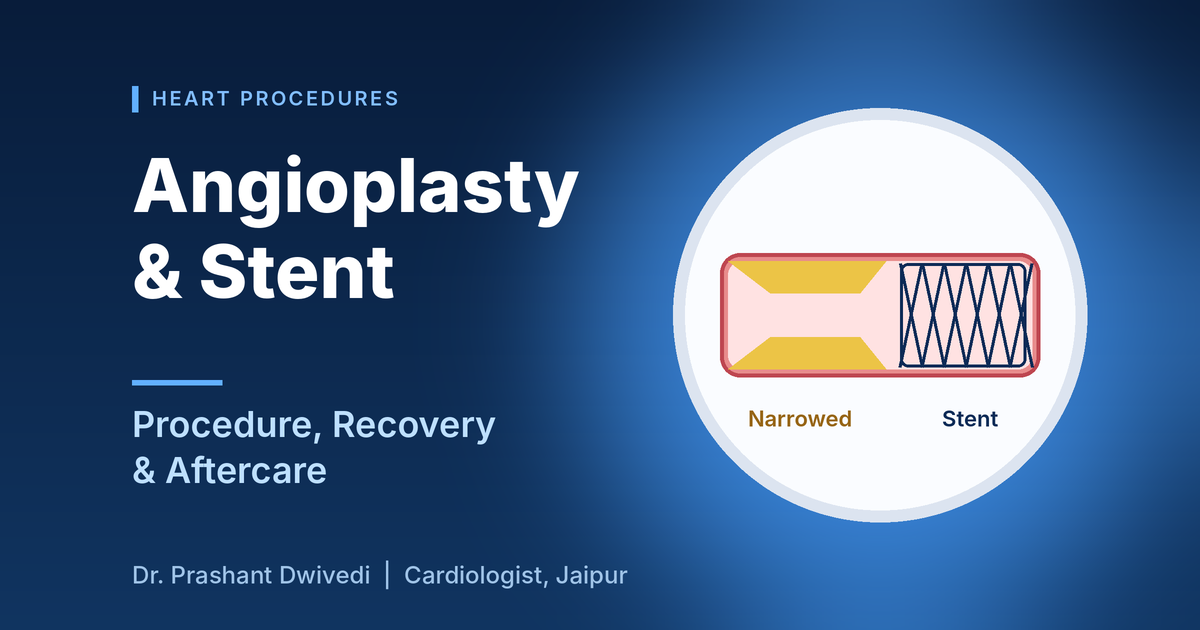
Angioplasty and stent placement is a procedure to open a narrowed or blocked heart artery without open-heart surgery. A thin tube is passed through the wrist or groin, a small balloon widens the artery, and a stent, a tiny mesh tube, is usually left in place to keep it open. This guide explains why angioplasty is done, how it works, the risks, what recovery looks like and how to care for your heart afterwards.
Key points at a glance
- Angioplasty, also called PCI, can be planned or done as an emergency during a heart attack.
- Most stents are coated with medicine to lower the chance of the artery narrowing again.
- Antiplatelet medicines after a stent are essential and must not be stopped without your doctor's advice.
- A stent treats the blockage but not the cause, so lifestyle and risk-factor control still matter.
What Is Angioplasty and a Stent?
According to the Mayo Clinic, coronary angioplasty opens clogged heart arteries using a small balloon on a catheter, and a stent, a wire mesh tube, is often placed to keep the artery open. The procedure is also called percutaneous coronary intervention (PCI). The blockage is caused by plaque build-up, a condition called coronary artery disease. To see how the blockage is first found, read our guide on coronary angiography.
Why Is Angioplasty Done?
- During a heart attack: to restore blood flow as quickly as possible. See heart attack symptoms, causes and treatment.
- Worsening angina: chest pain from blocked arteries that is getting worse.
- When medicines and lifestyle changes are not enough to improve heart health.
Coronary artery bypass surgery is the alternative. Your cardiologist chooses between them based on how severe the disease is, how many arteries are affected and your overall health. Read more in minimally invasive vs open heart surgery.
How Is Angioplasty Done?
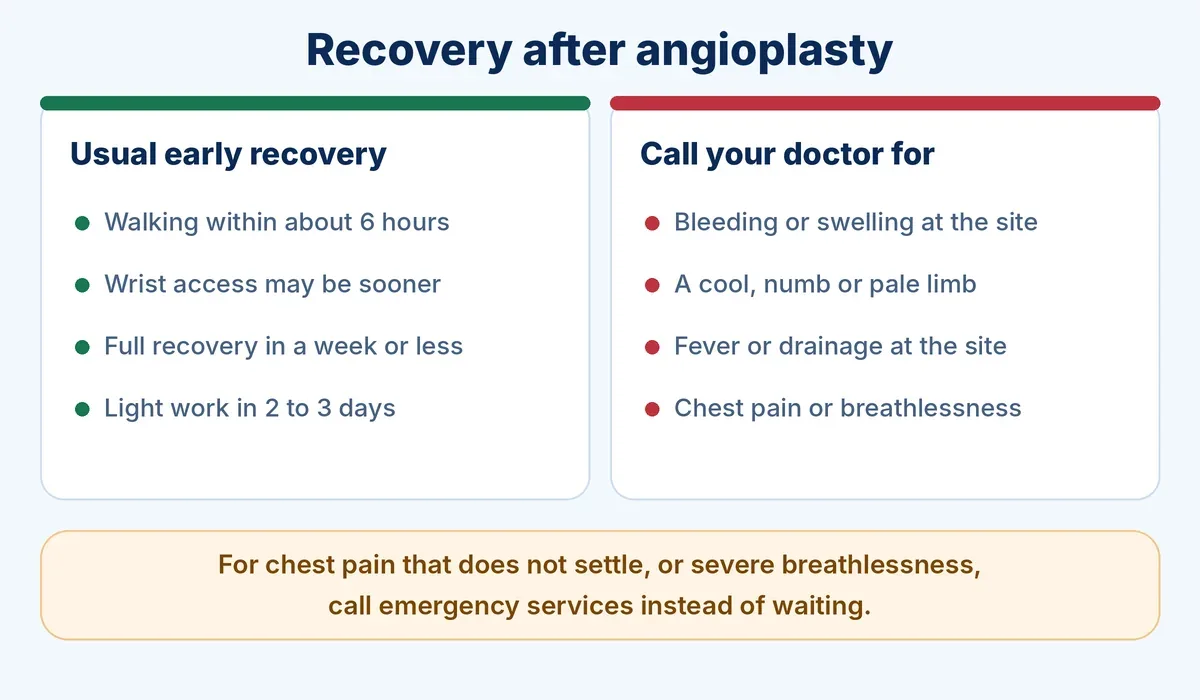
The artery is widened with a balloon, and a stent is usually left in place to keep it open.
- Your heart rhythm, blood pressure and oxygen level are monitored, and medicines are given through an IV line, including sedatives and blood thinners.
- The skin at the entry point, usually the wrist or groin, is numbed.
- A catheter is guided to the blocked artery, and contrast dye shows the blockage on X-ray pictures.
- A balloon is inflated to widen the artery and then deflated, and a stent is placed in the narrowed section.
- If there is more than one blockage, the steps may be repeated.
The procedure is usually done while you are awake, and sometimes under general anaesthesia. It takes place in a hospital with special imaging equipment.
Types of stents
Most stents release medicine, which lowers the chance that the artery will narrow again. A stent without medicine coating is also available, and your cardiologist will choose the one that suits your artery and overall health.
How to Prepare for Angioplasty
- Give your doctor a list of all medicines, supplements and herbal products you take.
- Do not stop or change aspirin, pain-relief tablets or blood thinners unless your team tells you to.
- For a planned procedure, you will usually be asked to fast for several hours and take approved medicines with a sip of water.
- Arrange for someone to take you home.
Risks of Angioplasty and Stenting
Angioplasty is a widely used procedure, but like any procedure it carries risks. Your doctor will discuss them with you in advance.
- More common: the artery narrowing again (restenosis), a blood clot in the stent that can cause a heart attack, and bleeding, bruising or infection at the entry site.
- Rare: a heart attack, a tear in the artery that needs emergency surgery, kidney injury (higher if the kidneys are already weak), stroke and rhythm problems.
Recovery After Angioplasty
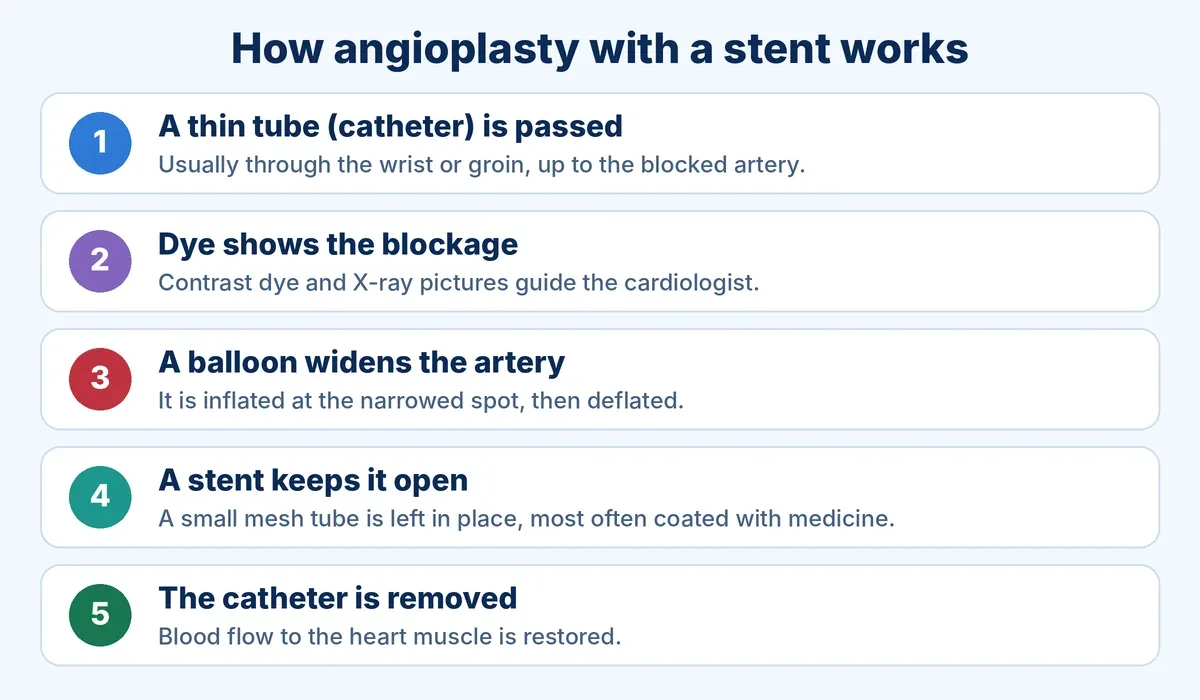
Most people recover quickly, but some symptoms need a call to the doctor or emergency care.
According to MedlinePlus, most people can walk around within about 6 hours, wrist access may allow this sooner, and full recovery usually takes a week or less. Many people return to work in 2 to 3 days if the job is not heavy.
- Keep the entry site dry for 24 to 48 hours. Showers are fine, but avoid baths and swimming for the first week.
- After groin access, avoid heavy lifting, driving and sports for at least 2 days or until your doctor allows.
- After wrist access, avoid lifting heavy weight with that arm.
- If the site bleeds or swells, lie down and press on it for 30 minutes, then call your doctor.
Warning signs to report
Contact your doctor for bleeding or swelling at the site that does not settle, a cool, numb or pale arm or leg, fever or drainage at the site, an unusually slow or fast pulse, dizziness or fainting. Chest pain or breathlessness that does not settle with rest needs emergency care. See also the warning signs of a cardiac emergency.
Life After a Stent: Medicines and Lifestyle
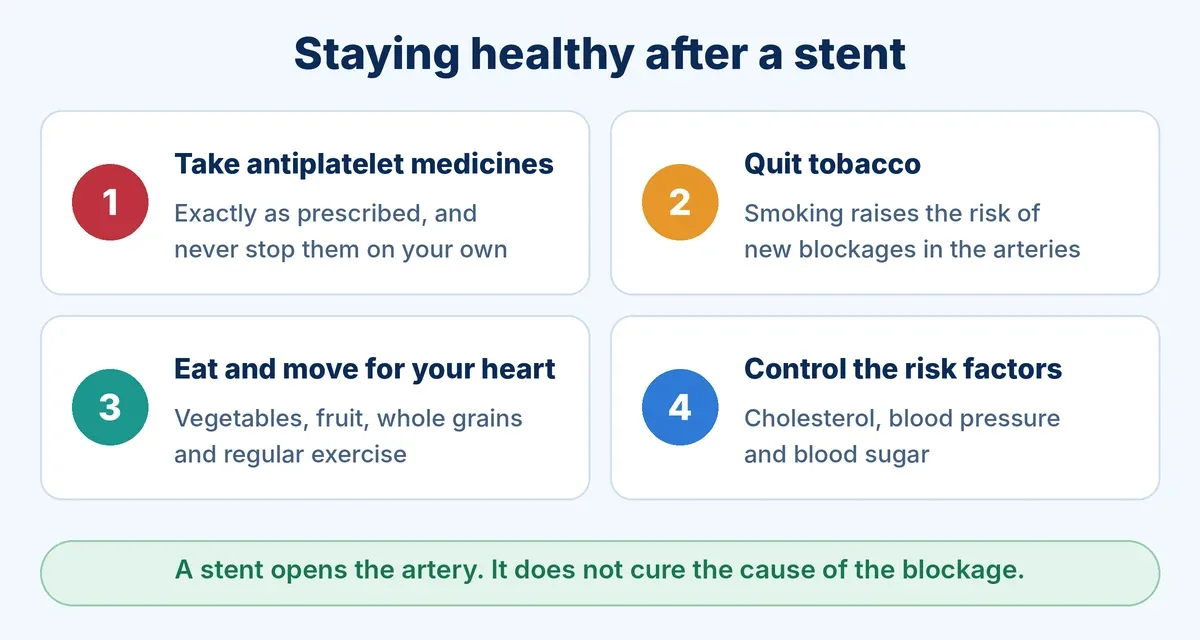
A stent opens the artery but does not remove the cause of the blockage.
- Antiplatelet medicines: most people take aspirin with another medicine such as clopidogrel, prasugrel or ticagrelor, which helps prevent clots in the stent. Take them exactly as prescribed and never stop them without speaking to your cardiologist, because stopping early can cause a clot in the stent.
- Cholesterol and blood pressure: your doctor may prescribe cholesterol medicine. Read about the lipid profile test and high blood pressure and your heart.
- Food: choose vegetables, fruit, whole grains and less saturated fat. See heart-healthy diet tips for every age.
- Exercise: ask about safe, regular exercise. Cardiac rehabilitation, a supervised programme of exercise, education and support, may be advised.
- No tobacco, and keep your weight and blood sugar in check.
- Follow-up: keep every appointment with your cardiologist.
Angioplasty does not cure the underlying disease, and arteries can narrow again, so these habits are as important as the procedure itself.
Angioplasty and Stent Care in Jaipur
Dr. Prashant Dwivedi is an interventional and structural heart cardiologist practising at the Eternal Heart Care Centre and Research, Jaipur. The treatment plan, whether medicines, angioplasty or surgery, is decided after a careful evaluation of your own heart condition. You can book an appointment for a personal assessment.
Frequently Asked Questions
Is angioplasty painful?
The entry site is numbed, and you are usually awake with sedation. You may feel some pressure, and some soreness or bruising at the site afterwards.
How long does it take to recover from angioplasty?
Most people walk within about 6 hours, and full recovery usually takes a week or less. Your doctor will tell you when you can drive, exercise and return to work.
Can a stent block again?
Yes. The artery can narrow again, called restenosis, or a clot can form in the stent. Medicine-coated stents, antiplatelet tablets and a heart-healthy lifestyle lower this risk.
Can I stop my blood thinners after a stent?
Not on your own. Antiplatelet medicines help prevent clots in the stent. Stopping them early can be dangerous, so speak to your cardiologist before any change.
Does a stent cure heart disease?
No. A stent opens a narrowed artery, but the underlying disease remains. Medicines, healthy habits and regular follow-up are needed to protect your heart.
This article is for general educational purposes only and does not replace personal medical advice, diagnosis or treatment. Please consult a qualified cardiologist about your own condition. In an emergency, go to the nearest hospital.
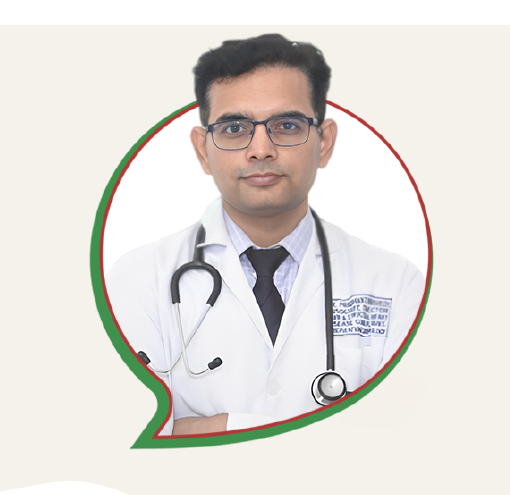
Dr. Prashant Dwivedi
Interventional and Structural Heart Cardiologist with expertise in TAVR, TMVR, MitraClip and advanced cardiac procedures.