Cardiac rehabilitation is a supervised programme that helps people recover and stay healthy after a heart attack, a stent, heart surgery or heart failure. It combines safe, gradual exercise with advice on food, medicines, quitting tobacco and emotional wellbeing. Many people go home after a heart event without a clear plan, and cardiac rehabilitation fills that gap. This guide explains who needs it, what it includes, how long it lasts and how to get the most from it.
Key points at a glance
- Cardiac rehab is usually advised after a heart attack, angioplasty, bypass or valve surgery and in heart failure.
- It has four parts: exercise, healthy eating, education and emotional support.
- Exercise is started under supervision and built up slowly.
- It can lower the risk of another heart problem and improve quality of life.
What Is Cardiac Rehabilitation?
According to MedlinePlus, cardiac rehabilitation is a programme that helps people live better with heart disease. It usually combines education and exercise, with the aim of improving heart and overall health, reducing symptoms and lowering the risk of future heart problems. It is not a medicine or a procedure. It is a structured way of returning to an active life with the help of a team.
Who Needs Cardiac Rehabilitation?
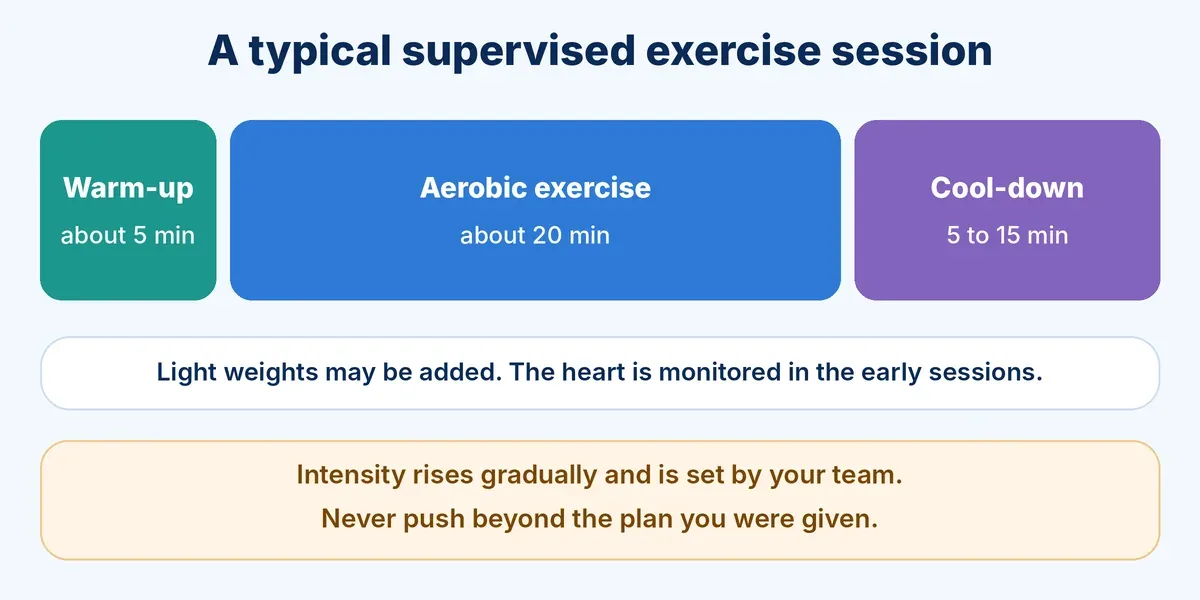
Cardiac rehabilitation is advised after many heart conditions and procedures.
It can help anyone who has had a heart problem. This includes people recovering from a heart attack, people who have had angioplasty and a stent, bypass surgery, or heart valve repair or replacement, and people with heart failure, stable angina or coronary artery disease. If your doctor has not mentioned it, ask whether cardiac rehab could help you. Some people, for example those with very high blood pressure or severe heart disease, may not be ready for exercise at first, but can still benefit from the education and counselling parts.
What Does a Cardiac Rehab Programme Include?
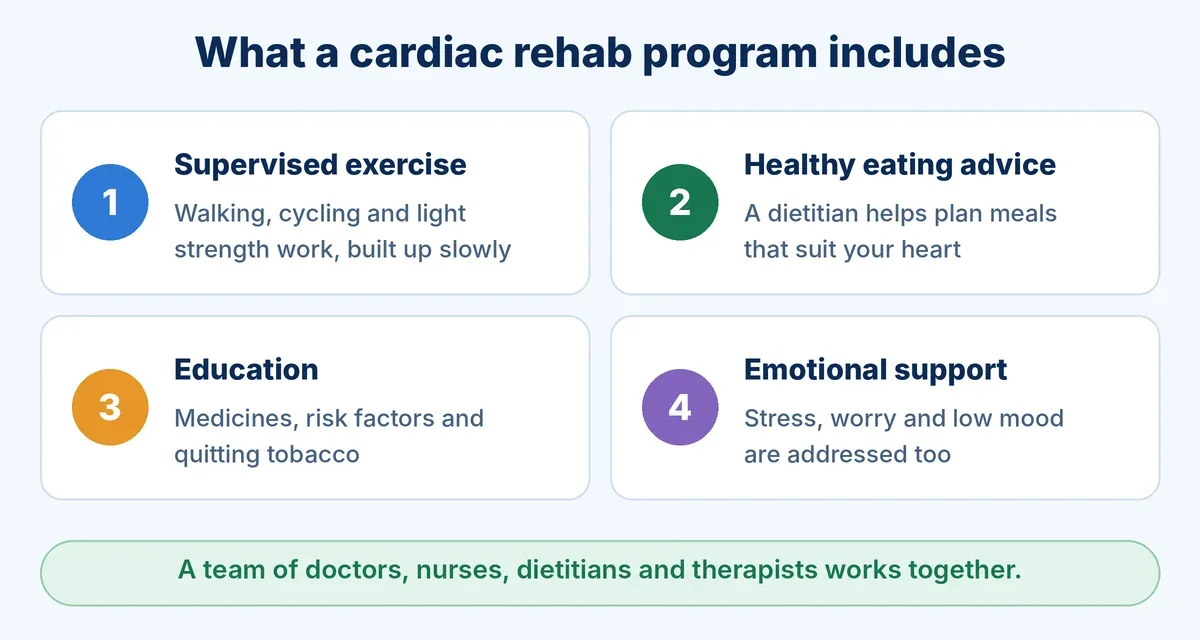
A good program looks after the body, the diet and the mind together.
1. Supervised exercise
Exercise strengthens the heart and improves fitness. Activities such as walking or cycling are combined with light strength work. The early sessions are monitored, and the effort is increased gradually. You also get a plan for the days you exercise on your own. Read about the benefits of regular exercise for the heart and examples of cardiovascular exercise.
2. Healthy eating advice
A dietitian helps you plan food choices that suit your heart and any conditions you have, such as diabetes, high blood pressure, high cholesterol or excess weight. See our heart-healthy diet tips.
3. Education and risk-factor control
The team explains your medicines, helps you quit smoking and teaches you to manage blood pressure, cholesterol and blood sugar. You can read more about the lipid profile test and high blood pressure and your heart.
4. Emotional support
Anxiety, low mood and stress are common after a heart event. Rehab programmes help you cope, and the team may include mental health specialists.
What Happens in an Exercise Session?
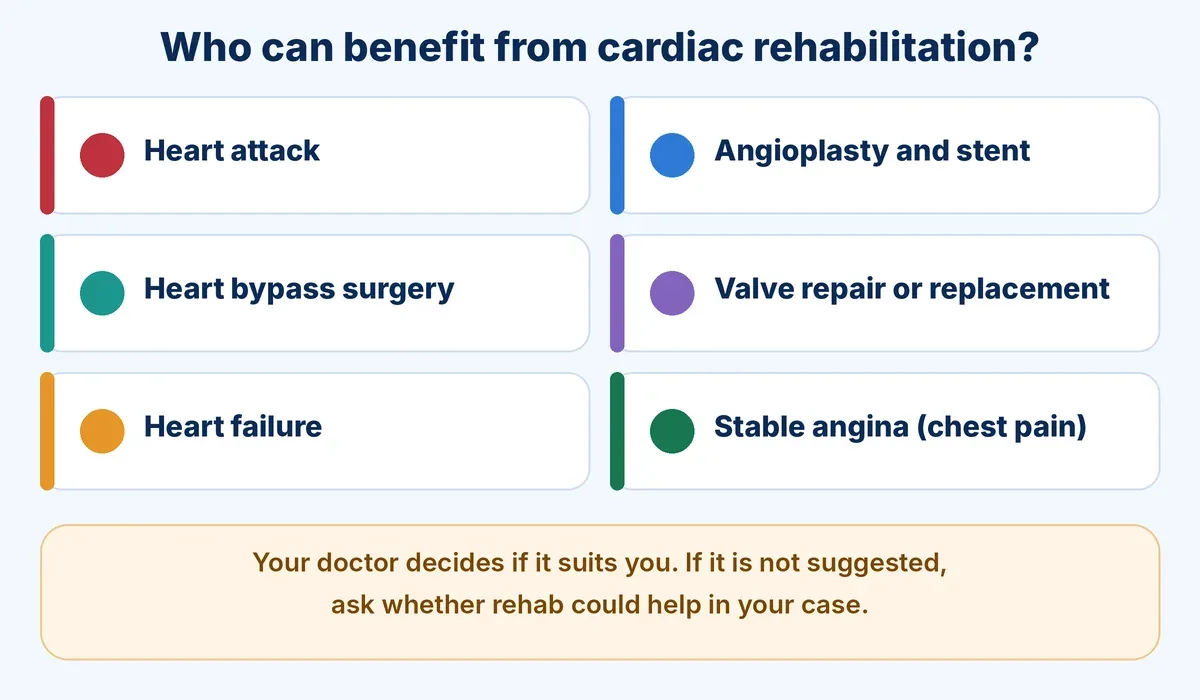
Exercise is increased gradually, and your heart is monitored in the early sessions.
According to MedlinePlus, a typical session includes a warm-up of about 5 minutes, about 20 minutes of aerobic exercise and a cool-down of about 5 to 15 minutes. Light weights or weight machines may be added, and your heart is monitored in the early sessions. Before you begin, the team checks your overall health with an examination, your history and sometimes heart tests, so that the programme is safe for you.
How Long Does Cardiac Rehabilitation Last?
MedlinePlus says most programmes last 3 to 6 months, and may be shorter or longer depending on your condition. The NHLBI describes regular sessions over a few months, with work with the team continuing for longer. Your cardiologist will advise what is right for you.
Benefits of Cardiac Rehabilitation
- Better fitness and an easier return to daily activities.
- A lower chance of another heart attack or of dying from a heart condition.
- Help with a heart-healthy diet, weight and quitting smoking.
- Lower blood pressure and cholesterol, and better blood sugar control.
- Less stress, and more confidence and independence.
Is Cardiac Rehab Safe?
Supervised exercise is designed to be safe for the individual. Serious problems are very rare and may include muscle or bone injuries or rhythm problems. Exercising under supervision at first is safer than starting alone. Tell your team about chest pain, unusual breathlessness, dizziness or palpitations, and stop and contact your doctor if warning signs appear during exercise at home. See the warning signs of a cardiac emergency.
How to Get Started
- Ask your cardiologist for a referral, in hospital or at your follow-up visit.
- Choose a centre close to home with convenient timings, so that you can attend regularly.
- If travelling is hard, ask whether a home-based programme is possible.
- Keep taking your medicines as prescribed, and keep your follow-up appointments.
Heart Recovery Care in Jaipur
Dr. Prashant Dwivedi is an interventional and structural heart cardiologist practising at the Eternal Heart Care Centre and Research, Jaipur. Recovery planning after a heart attack, stent or heart procedure is part of ongoing heart care, and the plan is personalised after a careful assessment. You can book an appointment to discuss your recovery.
Frequently Asked Questions
When can I start cardiac rehabilitation?
It is usually started after your doctor confirms you are stable. It may begin in the hospital and continue at a rehab centre. Your cardiologist will tell you the right time.
Is cardiac rehab only for people who have had a heart attack?
No. It is also advised after angioplasty and stenting, bypass or valve surgery, and for heart failure and stable angina.
Is exercise in cardiac rehab safe for the heart?
It is planned for your condition and monitored in the early sessions, so it is considered safe. Serious problems are very rare. Always follow the plan given by your team.
How long does cardiac rehabilitation take?
Most programmes last about 3 to 6 months, depending on the condition. Your team will tell you how long you need.
Can I do cardiac rehab at home?
Home-based programmes exist for people who cannot easily travel to a centre. Ask your cardiologist whether this is suitable for you.
This article is for general educational purposes only and does not replace personal medical advice, diagnosis or treatment. Please consult a qualified cardiologist about your own condition. In an emergency, go to the nearest hospital.

Dr. Prashant Dwivedi
Interventional and Structural Heart Cardiologist with expertise in TAVR, TMVR, MitraClip and advanced cardiac procedures.