Chest pain is one of the most common reasons people rush to a doctor, and one of the most confusing, because heartburn (gas or acidity) and a heart attack can feel alike. Some chest pain is harmless, but some is a medical emergency, and it is not always possible to tell the difference at home. This guide explains the typical clues for heart pain and gas, other causes of chest pain, and when to get urgent help.
Key points at a glance
- Heartburn is usually a burning feeling linked to meals, lying down or bending.
- Heart-related pain is often pressure, tightness or squeezing that may spread to the arm, neck, jaw or back.
- The symptoms of a heart attack vary a lot from person to person.
- If you are not sure, treat chest pain as an emergency.
Chest Pain: Heart or Gas?
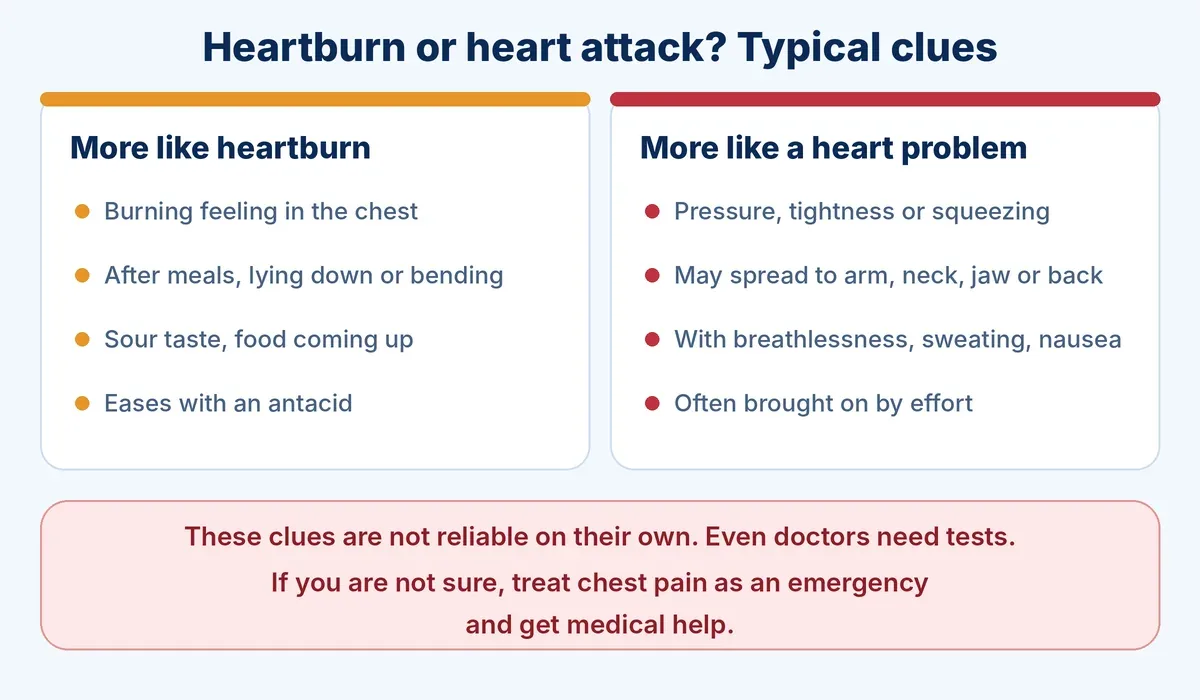
According to the Mayo Clinic, heartburn happens when digestive acid moves up into the food pipe. It typically causes a burning feeling in the chest that may involve the upper abdomen. It usually occurs after eating, lying down or bending over, and it can wake you from sleep. You may notice a sour taste or stomach contents rising into the throat, and antacids usually relieve it.
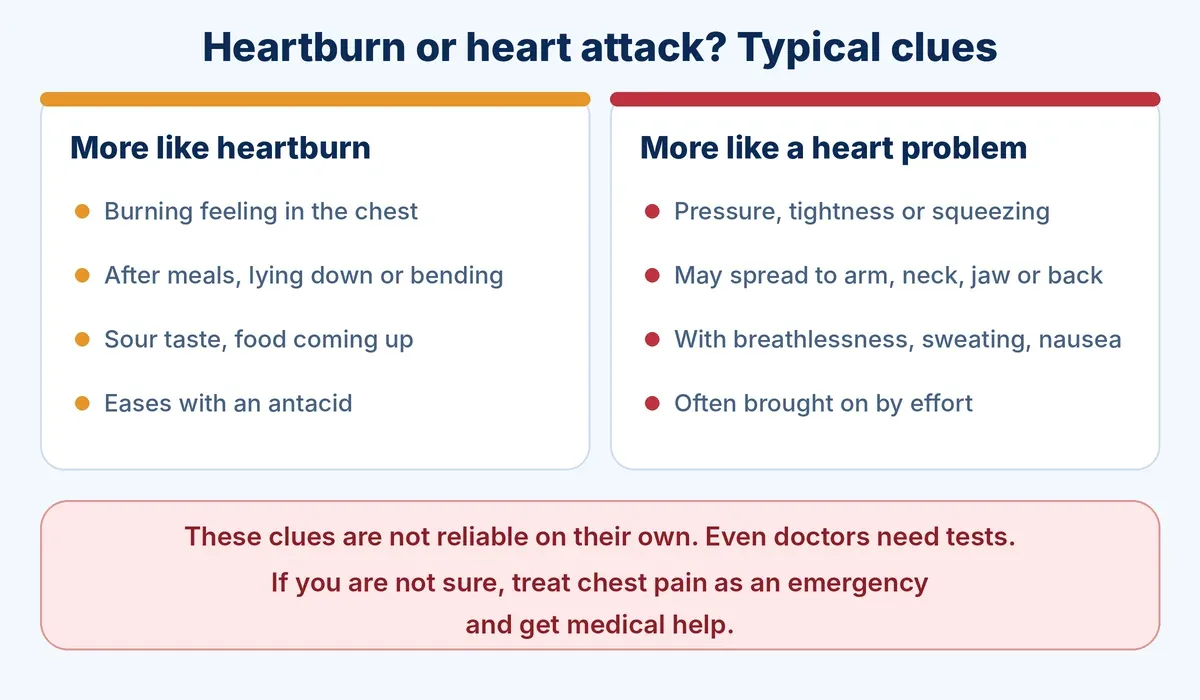
These clues are only a guide. Doctors often need tests to tell the two apart.
The "textbook" heart attack is sudden, crushing chest pain with breathlessness, often brought on by effort. But many heart attacks do not follow this pattern. Heart attack symptoms can include pressure, tightness, pain or a squeezing or aching feeling in the chest or arms that may spread to the neck, jaw or back. Other signs include nausea, indigestion, heartburn or abdominal pain, shortness of breath, cold sweat, fatigue and light-headedness. For a full list, read our guide on heart attack symptoms, causes and treatment.
Why it is hard to tell at home
Indigestion and heartburn can themselves be a sign of a heart attack, and even doctors cannot always tell the cause from the history and examination alone. This is why a hospital visit for chest pain usually includes tests such as an ECG to rule out a heart attack. Mass General Brigham also notes that some people, especially women, may have no chest sensation at all and only other symptoms. Read about heart attack symptoms in women and silent heart attack.
Other Causes of Chest Pain
Chest pain has many causes, and some are serious. Only an examination and tests can tell them apart.
- Heart: angina (chest pain from reduced blood flow to the heart muscle) and heart attack.
- Digestive system: acid reflux, spasm of the food pipe, gallbladder problems and pancreas problems. Gallbladder pain can spread to the chest and may follow a fatty meal.
- Lungs: pneumonia or a blood clot in the lung.
- Chest wall: muscle strain or inflammation. Pain that changes with position may point to a cause other than the heart.
- Anxiety: a panic attack or severe anxiety.
- Aorta: a tear in the main artery, called aortic dissection, which is an emergency.
Who Is at Higher Risk of Heart-Related Chest Pain?
The risk is higher in people with high blood pressure, high cholesterol, diabetes, smoking, excess weight or an existing heart condition, especially coronary artery disease. A pattern of chest discomfort that is getting worse, for example coming on with less effort than before, also needs attention. Read about high blood pressure and your heart, the lipid profile test and heart attack in young adults.
When Should You Call for Emergency Help?
If you are not sure what is causing chest pain, treat it as an emergency.
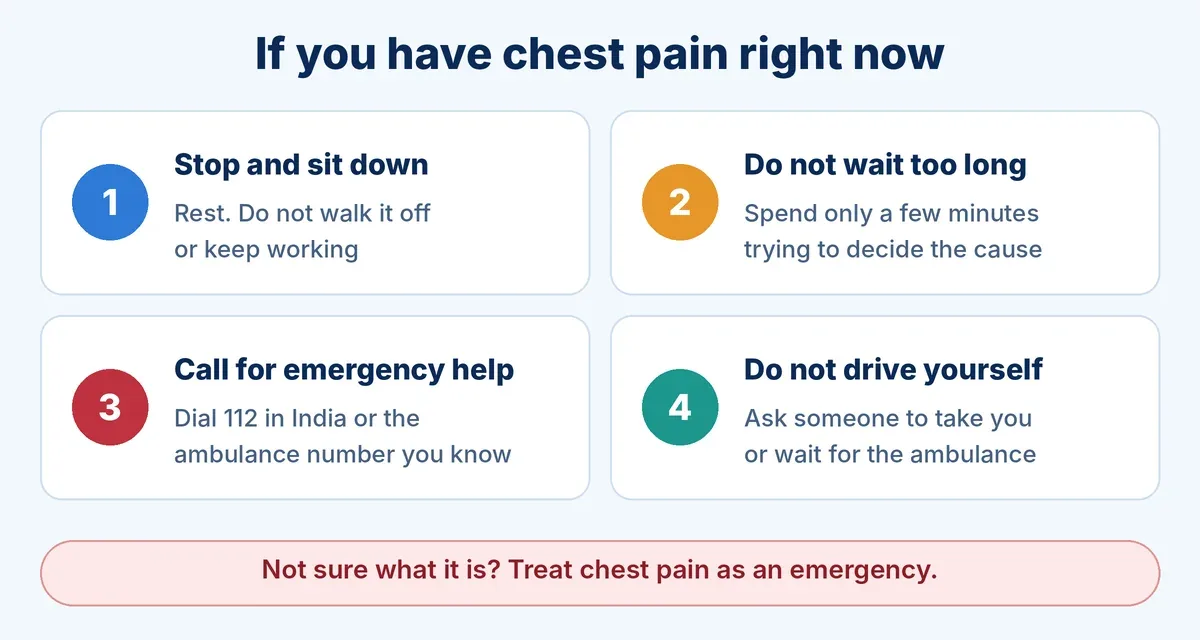
- Call for emergency help if you have chest pain and are not sure it is heartburn. In India you can dial 112.
- Do not spend long trying to work out the cause yourself. Mass General Brigham suggests no more than about 15 minutes, and urgent help if the discomfort lasts more than 15 minutes and is not relieved by rest.
- Call an ambulance rather than driving yourself.
- Seek help even if the pain goes away. As the Mayo Clinic says, the pain does not have to last long to be a warning sign, so contact your doctor about brief unexplained chest pain.
Learn more about the warning signs of a cardiac emergency and the signs of an unhealthy heart.
How Do Doctors Find the Cause of Chest Pain?
The doctor will ask about your pain and risk factors, examine you and usually check an ECG and blood tests. Depending on the findings, further tests such as an echocardiogram or a coronary angiogram may be advised. If a blockage is found, treatment may include medicines, angioplasty and a stent, or surgery.
Chest Pain Evaluation in Jaipur
Dr. Prashant Dwivedi is an interventional and structural heart cardiologist practising at the Eternal Heart Care Centre and Research, Jaipur. If you have repeated chest discomfort, even if it settles, a proper cardiac evaluation helps you know whether your heart is the cause. You can book an appointment. For sudden chest pain, go to the nearest hospital emergency instead of waiting for an appointment.
Frequently Asked Questions
How can I tell if chest pain is from gas or the heart?
Burning that follows meals, lying down or bending and eases with an antacid points towards heartburn. Pressure, tightness or squeezing that may spread to the arm, neck or jaw, or comes with breathlessness, sweating or nausea, points towards the heart. These clues are not reliable, so if you are unsure, get medical help.
Can a heart attack feel like indigestion?
Yes. Nausea, indigestion, heartburn or abdominal pain can be signs of a heart attack, especially along with breathlessness, cold sweat or fatigue.
Should I wait to see if chest pain goes away?
No. If you are not sure of the cause, seek emergency help rather than waiting. Even if the pain settles, speak to a doctor, because brief chest pain can also be a warning sign.
Can anxiety cause chest pain?
Yes. Panic attacks and severe anxiety can cause chest pain. But because the symptoms can look like a heart problem, a doctor should check you first.
Can I drive myself to the hospital with chest pain?
It is safer to call an ambulance or have someone take you. Driving alone can be dangerous if the pain gets worse or you feel faint.
This article is for general educational purposes only and does not replace personal medical advice, diagnosis or treatment. Please consult a qualified cardiologist about your own condition. In an emergency, go to the nearest hospital.

Dr. Prashant Dwivedi
Interventional and Structural Heart Cardiologist with expertise in TAVR, TMVR, MitraClip and advanced cardiac procedures.