A heart failure diet is not about eating less food. It is about controlling salt (sodium), following your doctor's advice on fluids, and tracking your weight every day, so that fluid does not build up in your body. In heart failure the heart does not pump as well as it should, and extra salt makes the body hold on to water, which can cause swelling and breathlessness. This guide explains the practical diet steps, hidden salt in everyday food and when to call your doctor.
Key points at a glance
- Many doctors advise limiting sodium to about 1,500 to 2,300 mg a day, but your own limit may differ.
- Fluid limits are set for each person, so do not follow a fixed number from the internet.
- Weigh yourself every morning and write it down.
- Take medicines exactly as prescribed, and call your doctor about sudden weight gain or worsening breathlessness.
Why a Heart Failure Diet Matters
Heart failure means the heart is not pumping blood as well as the body needs. To understand the condition itself, read our guide on congestive heart failure. When the heart is weak, the kidneys hold on to salt and water, which can build up in the legs and lungs. According to Mayo Clinic, sodium and fluid limits are widely recommended in heart failure care, with the strongest support in more severe disease. The research is limited, so advice should be personalised to your medicines and diet.
How Much Salt Can You Have With Heart Failure?
MedlinePlus says your provider may ask you to limit sodium to 1,500 to 2,300 mg per day. A Mayo Clinic report cites 2,000 mg a day, and notes that the Heart Failure Society of America suggests 2,000 to 3,000 mg for people with heart failure and under 2,000 mg for moderate to severe disease. These numbers are not identical, so ask your cardiologist for your own target.
Salt and sodium are not the same
Sodium is the part of salt that matters. A food label shows sodium in milligrams, so learn to read it. Many packaged foods list a high value in a very small serving.
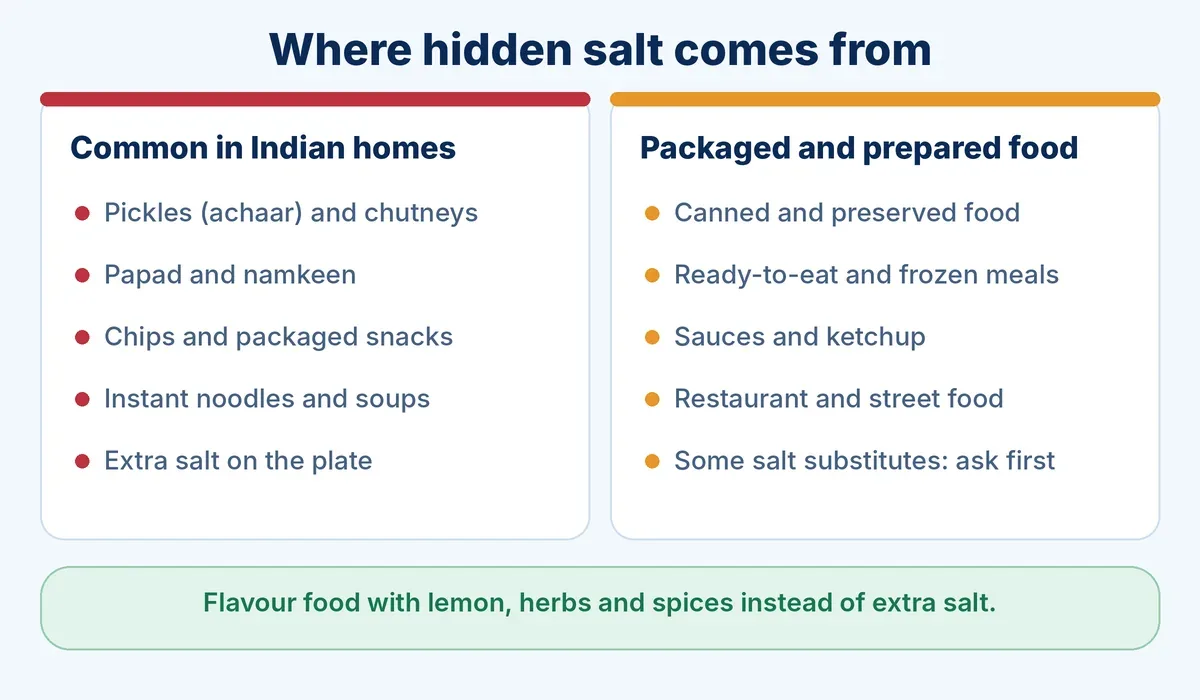
Much of the salt we eat comes from processed and prepared food, not from the salt shaker.
Practical ways to cut down on salt
- Cook with less salt and do not add extra salt at the table.
- Cut down on pickles (achaar), papad, namkeen, chips, instant noodles and packaged soups.
- Limit canned, preserved, ready-to-eat and frozen foods. MedlinePlus warns about hidden salt in prepared, canned and frozen foods. Choose fresh food where you can.
- Use lemon, garlic, ginger, herbs and spices for flavour.
- Ask your doctor before using salt substitutes. Mayo Clinic advises checking with a healthcare professional before using them.
- Take care when eating out or ordering food, as restaurant and street food is often salty.
For general heart-friendly eating, see our heart-healthy diet tips for every age.
Fluid Intake in Heart Failure
Not everyone with heart failure needs a strict fluid limit. MedlinePlus says your provider may advise changing which fluids you drink or how much, and may monitor your blood sodium. Some programmes use a daily cap, for example the Mayo Clinic report cites about 50 ounces (roughly 1.5 litres) a day, counting fluid from fruits too, but this is not a rule for everyone. Ask your cardiologist how much you should drink, and remember that tea, milk, soup, buttermilk and watery fruits all count towards fluid.
Weigh Yourself Every Day
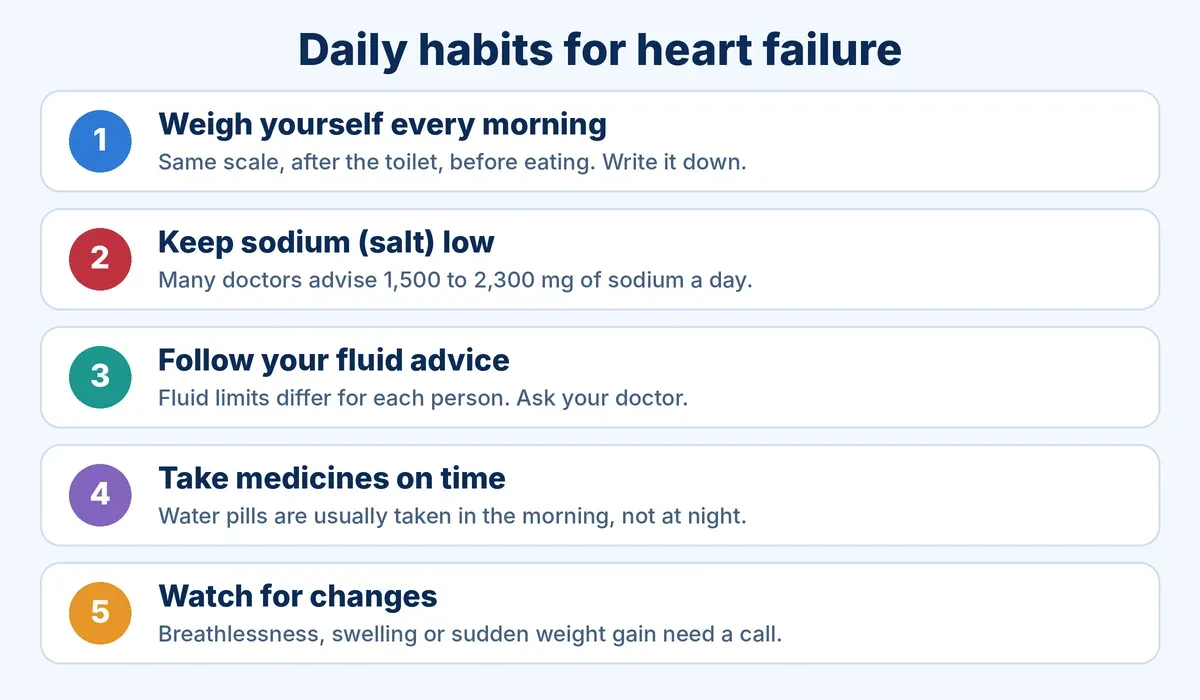
Small daily habits help you and your doctor catch fluid build-up early.
MedlinePlus advises weighing yourself every morning on the same scale, after using the toilet and before eating, wearing similar clothing, and writing the number on a chart. Sudden weight gain is often the first sign of fluid build-up, before swelling appears.
Medicines, Water Pills and Painkillers
- Take your medicines at the same time each day. Water pills (diuretics) are usually taken in the morning and not at night, according to MedlinePlus.
- You will need regular blood tests to check potassium and kidney function.
- Some painkillers, such as ibuprofen and naproxen, can make the body hold on to sodium and worsen heart failure. Ask your doctor before taking any painkiller.
When to Call Your Doctor
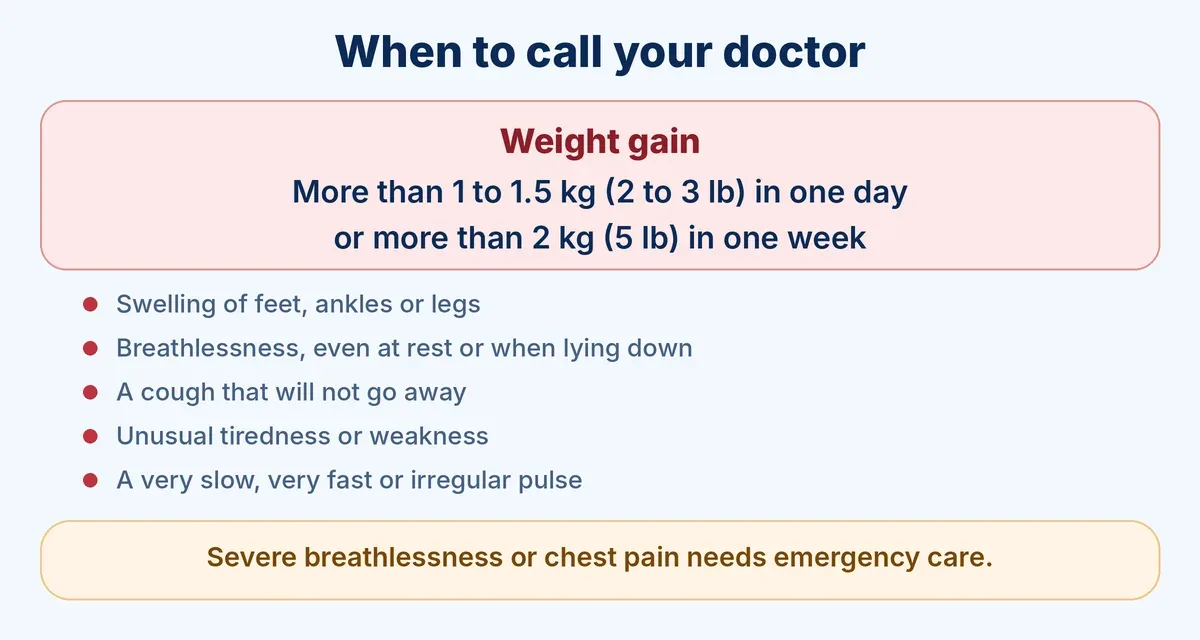
Rapid weight gain is often an early sign of fluid build-up.
MedlinePlus advises calling your provider if you gain more than 2 to 3 pounds (1 to 1.5 kg) in one day or 5 pounds (2 kg) in one week, or lose a lot of weight. Also call for swelling of the feet, ankles or legs, breathlessness during activity, at rest, when lying down or soon after falling asleep, a cough that does not go away, unusual tiredness or weakness, belly pain or tenderness, and a pulse that is very slow, very fast or irregular. Severe breathlessness or chest pain needs emergency care. See the warning signs of a cardiac emergency.
Other Habits That Help
- Activity: ask your cardiologist about safe exercise. See cardiac rehabilitation and how exercise improves heart health.
- Blood pressure and cholesterol: read about high blood pressure and your heart and the lipid profile test.
- Heart tests: an echocardiogram shows how well your heart pumps and is used to follow heart failure.
- Dietitian: MedlinePlus suggests meeting with a dietitian for a low-salt plan that suits you.
Heart Failure Care in Jaipur
Dr. Prashant Dwivedi is an interventional and structural heart cardiologist practising at the Eternal Heart Care Centre and Research, Jaipur. Diet and fluid advice in heart failure should always be matched to your medicines, kidney function and symptoms. You can book an appointment for a personal plan.
Frequently Asked Questions
How much salt is allowed in heart failure?
Many doctors advise limiting sodium to about 1,500 to 2,300 mg a day, but the right limit depends on your condition and medicines. Ask your cardiologist for your own target.
Do I have to limit water in heart failure?
Not always. Some people need a fluid limit and some do not. Your doctor decides, based on your symptoms, blood tests and medicines.
Why do I need to weigh myself every day?
Rapid weight gain is often the earliest sign that fluid is building up. Daily weights help you and your doctor act early, before swelling or breathlessness gets worse.
Can I use salt substitutes?
Check with your doctor first. Some substitutes contain potassium, which can be a problem with certain heart and kidney medicines.
Which painkillers should I avoid in heart failure?
Ibuprofen and naproxen can cause the body to hold on to sodium and worsen heart failure. Always ask your doctor before taking any painkiller.
This article is for general educational purposes only and does not replace personal medical advice, diagnosis or treatment. Please consult a qualified cardiologist about your own condition. In an emergency, go to the nearest hospital.

Dr. Prashant Dwivedi
Interventional and Structural Heart Cardiologist with expertise in TAVR, TMVR, MitraClip and advanced cardiac procedures.