Heart blockage treatment depends on how many arteries are narrowed, how serious each narrowing is and how much it affects you. Options range from lifestyle changes and medicines to angioplasty with a stent or bypass surgery. (हार्ट ब्लॉकेज का इलाज हर मरीज़ में अलग होता है, इसलिए सही विकल्प हृदय रोग विशेषज्ञ जाँच के बाद बताते हैं।) This guide explains each option in simple words, who may need which, and what to ask your cardiologist.
Key points at a glance
- "Heart blockage" usually means narrowed or clogged heart arteries, called coronary artery disease.
- Treatment can include lifestyle changes, medicines, angioplasty with stent, or bypass surgery.
- Some people with stable disease and well-controlled symptoms can be treated with medicines and lifestyle measures alone, as a Mayo Clinic cardiologist explains.
- Your cardiologist decides the right option after tests. Never stop medicines on your own.
Heart Blockage Treatment: What Are the Options?
According to the Mayo Clinic, treatment of coronary artery disease includes lifestyle changes, medicines and procedures. Which one is used depends on the person and the blockage. Not sure whether your symptoms point to a blockage? Read how to check heart blockage at home and the signs of an unhealthy heart.
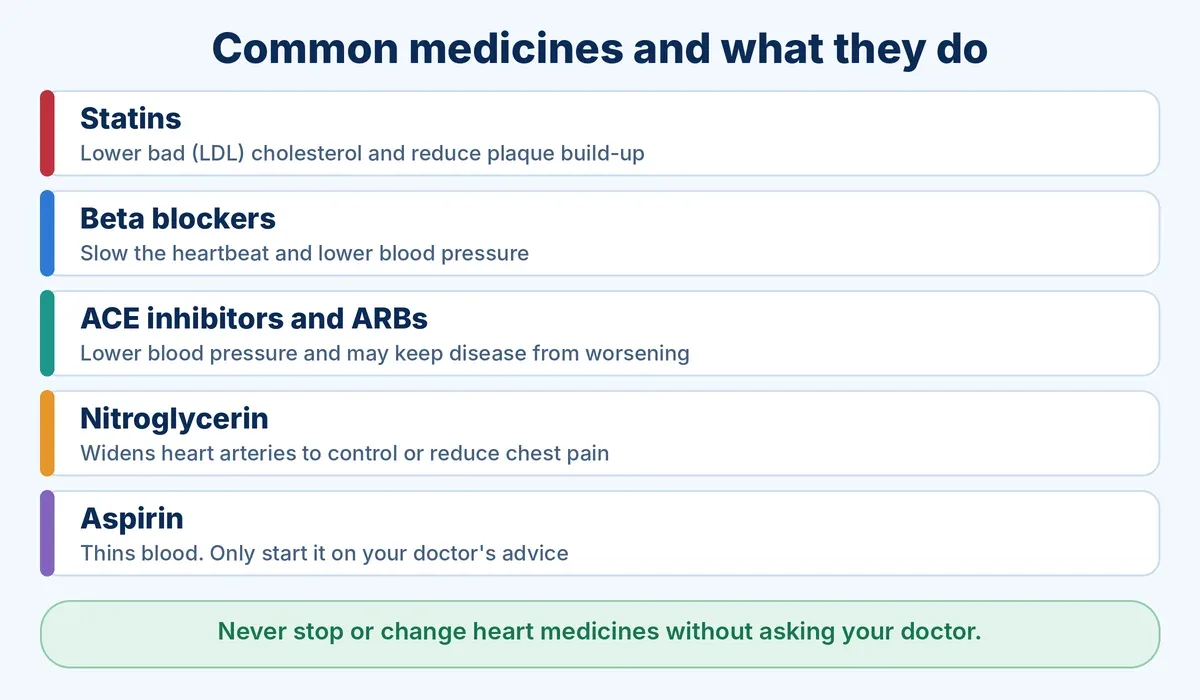
Treatment ranges from lifestyle and medicines to angioplasty or bypass surgery, depending on the blockage.
1. Lifestyle changes
Mayo Clinic lists these as key steps: quit smoking or tobacco, eat heart-healthy foods (fruits, vegetables and whole grains, with less sugar, salt and saturated fat), exercise regularly (it suggests 30 to 60 minutes of activity most days), keep a healthy weight, control blood pressure, cholesterol and blood sugar, limit alcohol, sleep 7 to 9 hours and manage stress. See our guides on heart-healthy diet, smoking and heart disease, sleep and heart health and exercise for the heart.
Medicines for Heart Blockage
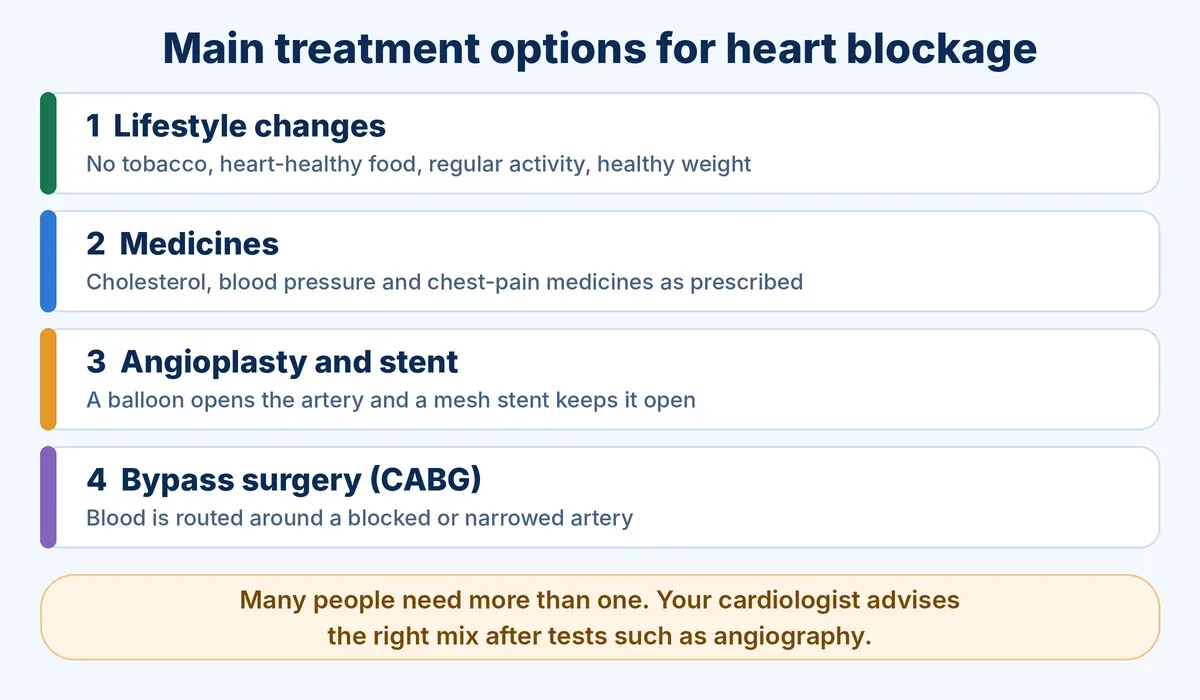
Medicines should only be started, changed or stopped on your cardiologist's advice.
Mayo Clinic describes several medicine groups. Statins and other cholesterol medicines lower LDL ("bad") cholesterol and reduce plaque build-up. Beta blockers slow the heartbeat and lower blood pressure, and after a heart attack they may reduce the risk of future attacks. ACE inhibitors and ARBs lower blood pressure and may keep the disease from worsening. Nitroglycerin widens the heart arteries to control or reduce chest pain. Aspirin thins the blood and prevents clots, but it can cause serious bleeding, so do not start it without talking to your care team. Learn more in cholesterol and heart disease, the lipid profile test, high blood pressure and your heart and diabetes and heart disease.
Can medicines alone be enough?
A Mayo Clinic Minute featuring cardiologist Dr. Todd Miller says some patients with stable coronary artery disease whose symptoms are reasonably well controlled could be treated with medicine and lifestyle measures alone. Patients whose symptoms worsen may benefit from more aggressive treatment. This applies to stable disease and does not apply to a heart attack, which is an emergency.
Angioplasty and Stent
In angioplasty (also called percutaneous coronary intervention), a balloon on a catheter widens the clogged artery, and a wire-mesh stent may be placed to keep it open. Mayo Clinic notes that most stents are medicine-coated. Before this, doctors often do a coronary angiography to see the blockages. Read the full guide on angioplasty and stent.
Bypass Surgery (CABG)
In coronary artery bypass surgery, a surgeon uses a vein or artery from another part of the body to route blood around a blocked or narrowed artery. It is an open-heart operation. Mayo Clinic recommends cardiac rehabilitation after heart surgery to help recovery. See heart bypass surgery vs open heart surgery, minimally invasive vs open heart surgery and cardiac rehabilitation.
Questions to Ask Your Cardiologist
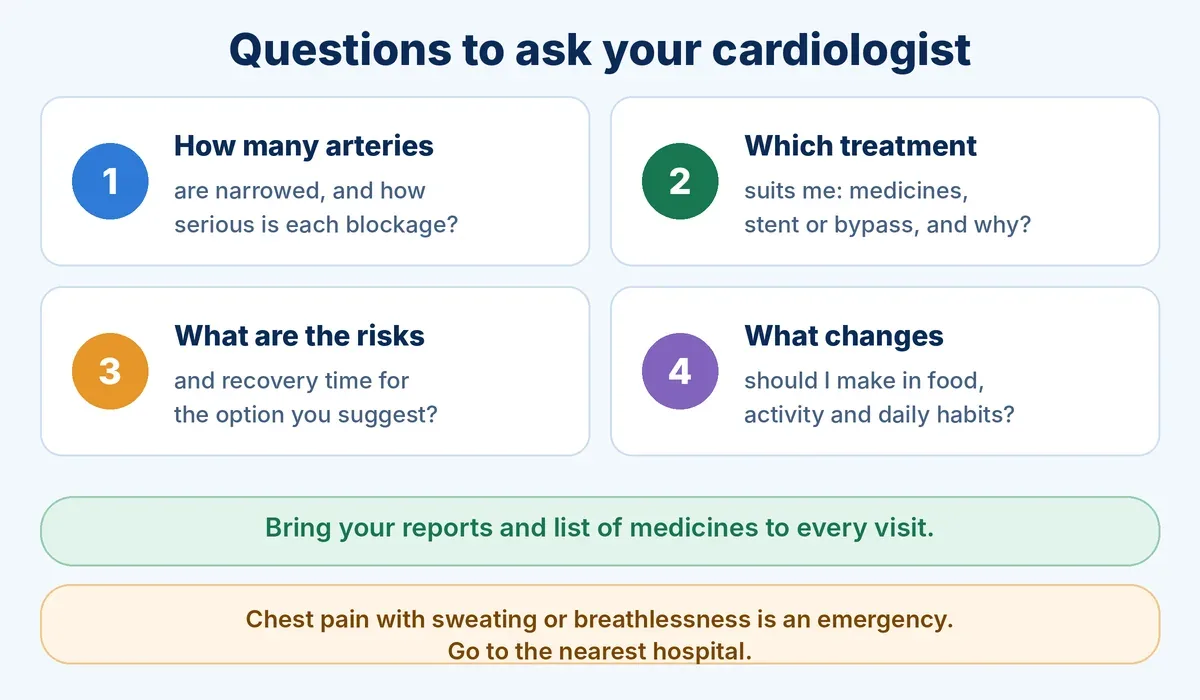
Written questions help you make the most of your appointment.
Ask how many arteries are narrowed and how serious each blockage is, which treatment suits you and why, what the risks and recovery time are, and what changes to make in food, activity and daily habits. Bring your reports and a list of all your medicines.
When to Get Urgent Help
Chest pain, pressure or tightness with sweating, breathlessness or lightheadedness can mean a heart attack and needs emergency care. Read heart attack symptoms, chest pain: heart or gas, silent heart attack and the warning signs of a cardiac emergency.
Heart Care in Jaipur
Dr. Prashant Dwivedi is an interventional and structural heart cardiologist practising at the Eternal Heart Care Centre and Research, Jaipur. A heart check-up and the right tests show whether you have a blockage and which treatment suits you. You can book an appointment. For sudden chest pain, go to the nearest hospital emergency.
Frequently Asked Questions
What is the treatment for heart blockage?
Treatment includes lifestyle changes, medicines, angioplasty with a stent, or bypass surgery, according to Mayo Clinic. Your cardiologist chooses based on your tests and symptoms.
Can heart blockage be treated without surgery?
Some people with stable coronary artery disease and well-controlled symptoms can be treated with medicines and lifestyle measures, as explained by a Mayo Clinic cardiologist. Others may need angioplasty or surgery. Only your cardiologist can say which applies to you.
What is the difference between angioplasty and bypass?
Angioplasty widens the artery with a balloon and usually places a stent. Bypass surgery is an open-heart operation that routes blood around the blockage using a vein or artery from elsewhere in the body.
Which medicines are used for heart blockage?
Common ones include statins, beta blockers, ACE inhibitors or ARBs, nitroglycerin and sometimes aspirin. Take them only as prescribed and do not stop them on your own.
हार्ट ब्लॉकेज का इलाज क्या है?
हार्ट ब्लॉकेज के इलाज में जीवनशैली में बदलाव, दवाइयाँ, एंजियोप्लास्टी के साथ स्टेंट या बाईपास सर्जरी शामिल हो सकती है। कौन सा इलाज सही है, यह आपके हृदय रोग विशेषज्ञ जाँच के बाद तय करते हैं।
This article is for general educational purposes only and does not replace personal medical advice, diagnosis or treatment. Please consult a qualified cardiologist about your own condition. In an emergency, go to the nearest hospital.
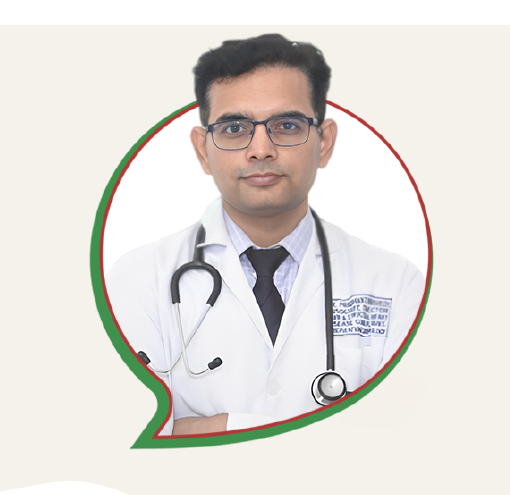
Dr. Prashant Dwivedi
Interventional and Structural Heart Cardiologist. Director of the TAVR and Structural Heart Program, Eternal Hospital, Jaipur.